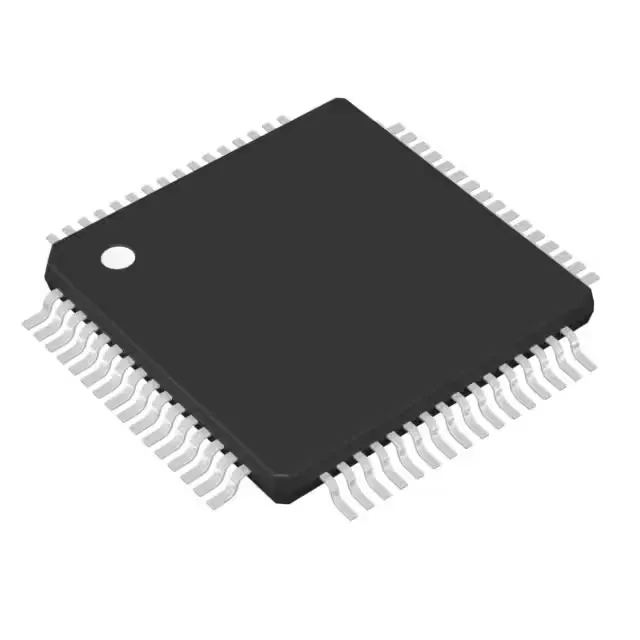
Texas Instruments MSP430F248TPM — Microcontrollers & Processors (MCU / MPU / DSP)

Texas Instruments MSP430F248TPM 16-Bit MCU, 16 MHz

MPNMSP430F248TPM
Active

Texas Instruments MSP430F2xx series MSP430F248TPM, 16-bit MSP430 CPU16, 16 MHz, 48 KB Flash, 4K x 8 SRAM, 48 I/O, 8x12b ADC, I²C/SPI/UART, 1.8V-3.6V, -40°C~105°C, 64-LQFP (10x10), Tray.

$13.5700Ref. price · indicative, final on quote
Independent supplier — new & surplus stockAuthenticity-screened · ESD-safe packingListing updated Aug 2026

Specifications

MSP430F248TPM specifications
ParameterValue
SeriesMSP430F2xx
MountingSurface Mount
Oscillator typeInternal
Program memory typeFLASH
Voltage - supply (Vcc (Vdd))1.8V ~ 3.6V
Operating temperature-40°C~105°C(TA)
Speed16MHz
PackageTray
RAM size4K x 8
Core size16-Bit
PeripheralsBrown-out Detect/Reset, POR, PWM, WDT
ConnectivityI²C, IrDA, LINbus, SCI, SPI, UART/USART
Number of i (O)48
Core processorMSP430 CPU16
Case64-LQFP
Data convertersA/D 8x12b
Program memory size48KB (48K x 8 + 256B)

Product details

At 16 MHz the flash wait state is zero, so instruction fetch keeps pace with the core without pipeline stalls — a detail that matters when the interrupt latency budget is tight.

48 KB Flash / 4 KB SRAM — sizing the firmware and data buffers

The 48 KB program memory (48K x 8 plus 256 bytes of information memory) and 4 KB SRAM (4K x 8) define the firmware complexity ceiling. For a typical MSP430 application — a field sensor logging data over UART or LIN, a motor controller running a PI loop, or a handheld instrument with a segmented LCD — this memory tier is comfortable without overprovisioning. The 256-byte info segment is useful for calibration constants or device serial numbers that survive a full-chip erase.

The 105°C ceiling covers self-heating in a sealed enclosure without derating the core speed.

Peripheral set — ADC, serial interfaces, and watchdog

The 8-channel 12-bit ADC handles analog sensor inputs (thermistors, current shunts, potentiometers) without an external converter.

Package and supply — 64-LQFP, 1.8V to 3.6V

The supply range from 1.8V to 3.6V lets it run from two alkaline cells, a single Li-ion, or a regulated 3.3V rail.

Frequently asked questions

Is MSP430F248TPM a direct replacement for MSP430F247TPM?

The MSP430F248TPM is a higher-density variant of the MSP430F247TPM — it offers 48 KB Flash versus 32 KB, with the same 4 KB SRAM, 16 MHz core, 64-LQFP package, and peripheral set. For a firmware image that fits in 32 KB, the F248 is a drop-in hardware replacement; if the code exceeds 32 KB, the F248 is the natural upgrade path without a PCB change.

What are the programming requirements for MSP430F248TPM?

The MSP430F248TPM uses TI's Spy-Bi-Wire (SBW) or JTAG interface for programming and debug, both accessible through the standard 4-pin or 2-pin header. The internal flash is programmable at 1.8V to 3.6V supply, so no external programming voltage is needed. TI's MSP430-FET or any third-party tool supporting SBW/JTAG works with this device.

How does MSP430F248TPM compare to MSP430F249TPM?

The MSP430F249TPM is the next step up in the same family: it offers 60 KB Flash and 2 KB SRAM, versus the F248's 48 KB Flash and 4 KB SRAM. Both share the 16 MHz core, 64-LQFP package, 8x12b ADC, and identical peripheral set. The choice comes down to firmware size versus SRAM budget — the F248 has more RAM for data buffers, while the F249 has more code space.