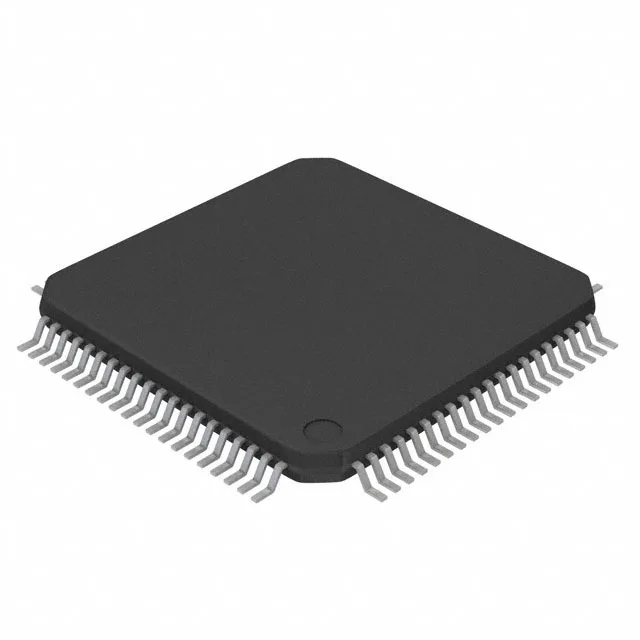
That 16 MHz ceiling is the throughput boundary for this device — it's not a performance monster, but it's more than adequate for the ultra-low-power control and sensor-fusion tasks the MSP430 architecture was designed for. The 16-bit data path keeps code density tight for register-oriented operations, and the CPU16 core includes a hardware multiplier that accelerates 16x16 multiply-accumulate steps without burning cycles in software. Program memory is 92 KB of on-chip Flash, organized as 92K x 8 plus 256 bytes for information storage. That's enough headroom for a modest RTOS, a communication stack (say, a simple Modbus or CANopen node), and application code for a sensor hub or motor-control loop. The 4K x 8 SRAM is the tight spot — budget carefully for stack, DMA buffers, and any data logging.
Industrial temperature range — not just a commercial part
The 105°C upper bound covers most under-hood and sealed-enclosure cases where self-heating plus ambient can push die temperature past 85°C.
Peripheral set — what's on the bus
The 8-channel 12-bit ADC is the standout analog peripheral; it's a successive-approximation converter with internal reference, so you can read eight single-ended analog inputs without an external ADC.
It is ROHS3 compliant.