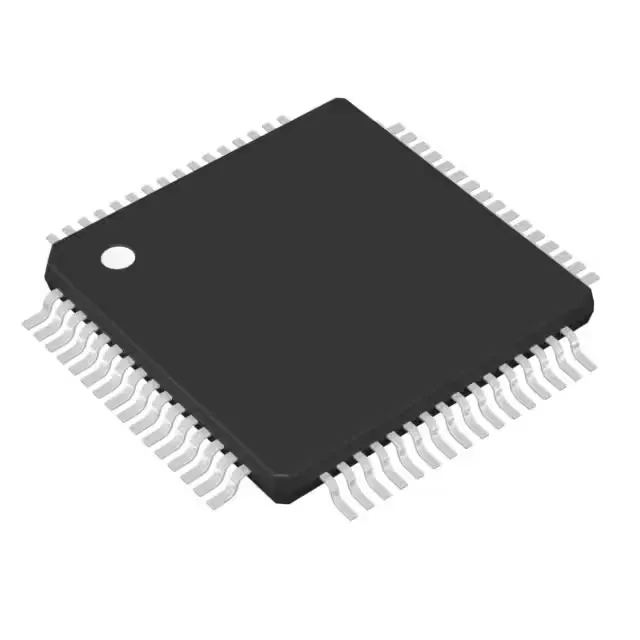
Texas Instruments MSP430F2416TPMR — Microcontrollers & Processors (MCU / MPU / DSP)

MSP430F2416TPMR Texas Instruments 16-bit MCU, 16 MHz

MPNMSP430F2416TPMR
Active

Texas Instruments MSP430F2xx series, MSP430F2416TPMR, 16-bit MCU, 16 MHz, 92 KB Flash, 4K x 8 RAM, 48 I/O, I²C/SPI/UART, 8x12-bit ADC, -40°C to 105°C, 64-LQFP.

$14.2200Ref. price · indicative, final on quote
Packaging64-LQFP
RoHSROHS3 Compliant
SeriesMSP430F2xx
Independent supplier — new & surplus stockAuthenticity-screened · ESD-safe packingListing updated Aug 2026

Specifications

MSP430F2416TPMR specifications
ParameterValue
SeriesMSP430F2xx
MountingSurface Mount
Oscillator typeInternal
Program memory typeFLASH
Voltage - supply (Vcc (Vdd))1.8V ~ 3.6V
Operating temperature-40°C~105°C(TA)
Speed16MHz
PackageTape & Reel (TR); Cut Tape (CT)
RAM size4K x 8
Core size16-Bit
PeripheralsBrown-out Detect/Reset, DMA, POR, PWM, WDT
ConnectivityI²C, IrDA, LINbus, SCI, SPI, UART/USART
Number of i (O)48
Core processorMSP430 CPU16
Case64-LQFP
Data convertersA/D 8x12b
Program memory size92KB (92K x 8 + 256B)

Product details

16 MHz MSP430 CPU16 — what the core speed buys you

The MSP430F2416TPMR: That clock rate, combined with the 92 KB Flash and 4K x 8 RAM, places it in the mid-range of the ultra-low-power MSP430 lineup — enough throughput for sensor fusion, Modbus RTU slaves, or battery-backed data loggers without burning through the power budget. The 48 I/O lines and the integrated 8-channel 12-bit ADC mean you can keep external glue logic off the board for most mixed-signal control loops.

Housed in a 64-LQFP with a 10x10 mm body, surface-mount only.

Frequently asked questions

What is the difference between MSP430F2416TPMR and MSP430F2418TPMR?

The MSP430F2418TPMR is a higher-density sibling in the same MSP430F2xx family. The key difference is program memory: the F2416 has 92 KB Flash, while the F2418 offers 116 KB. Both share the same 16 MHz CPU16 core, 4K x 8 RAM, 48 I/O, and 64-LQFP package, so a firmware migration is pin-compatible.

How to program MSP430F2416TPMR?

Programming is done through the Spy-Bi-Wire (SBW) or JTAG interface using TI's MSP-FET or eZ-FET debug probes. The internal Flash is self-programmable via the MSP430 CPU16, so field updates over UART or I²C are possible with a bootloader.