16 MHz MSP430 core with 56 KB Flash — what the memory budget buys
The 48 general-purpose I/O lines give enough headroom for parallel LCD data buses or a bank of discrete sensor inputs without an external port expander.
At the low end of the supply, the 16 MHz core still executes with one flash wait state — budget that in your cycle-count timing for tight loops.
The 105°C ceiling is the practical limit for sealed enclosures with no active cooling; above that, you are looking at a different temperature-grade tier.
I²C, SPI, UART — peripheral set for sensor and display buses
For a typical design, the I²C bus handles a temperature/humidity sensor and an EEPROM, while the SPI port drives an OLED display or a radio transceiver. The LINbus peripheral is useful for automotive sub-networks where a single twisted pair replaces a heavier harness.
The ROHS3 compliance is current. The base product number is MSP430F2410, which covers the full family variants.
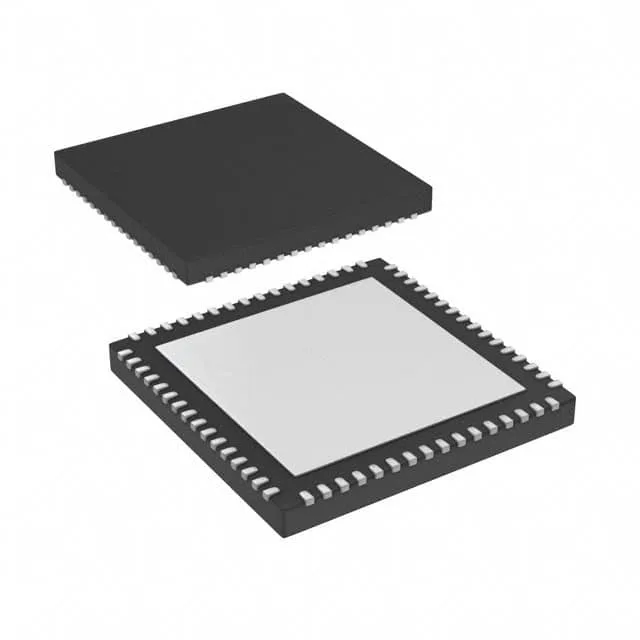
64-VQFN package — footprint and reflow considerations
Housed in a 64-VFQFN exposed-pad package (9x9 mm body), the MSP430F2410TRGCR is a surface-mount device. The exposed thermal pad under the package needs a via array to the ground plane to pull heat from the die — without it, junction temperature climbs faster under continuous 16 MHz operation at the 105°C ambient corner.