The part is designed for low-power embedded control, with a supply range from 1.8V to 3.6V that allows direct battery operation.
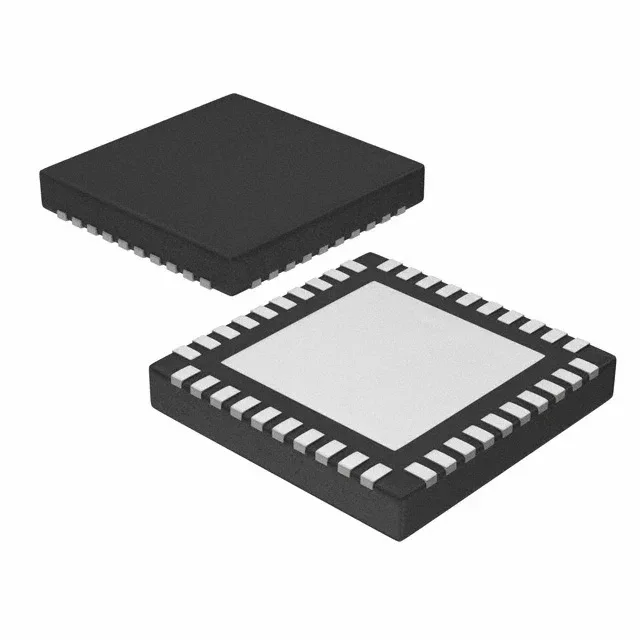
The 40-VFQFN package with exposed pad (6x6 mm) helps conduct heat to the board ground plane, though the 16 MHz core and Flash operation keep dissipation low enough that thermal management is straightforward in most designs.
For a production BOM this removes the urgency to qualify a replacement or stockpile for a last-time buy.
16 MHz speed and 16KB Flash — sizing the firmware and timing budget
At 16 MHz the CPU16 core executes most instructions in a single clock cycle, giving roughly 16 MIPS throughput. That is enough for sensor polling, PID loops, and communication protocol handling at moderate update rates. The 16KB Flash holds the application code plus a bootloader if you leave room; the 256B information memory segment is useful for calibration constants or configuration parameters that survive a firmware update. The 2KB RAM limits data buffering—plan for a few hundred bytes of stack and a modest packet buffer rather than large frame captures.
The MSP430F2350TRHAT includes a slope A/D converter, which is a low-cost, moderate-speed ADC useful for temperature or battery voltage monitoring.