16-bit MSP430 at 16 MHz — what the core speed buys you
The 16 MHz clock is the sweet spot for this architecture — fast enough to handle sensor polling, communication protocol handling, and control loops, while keeping active current low enough for battery-powered instruments and remote nodes.
Peripheral set and connectivity — what hooks up to it
The 32 general-purpose I/O lines give headroom for parallel displays, keypads, or additional GPIO-controlled peripherals. The slope A/D converter handles basic analog measurements without needing an external ADC.
Package and temperature — where it lives on the board
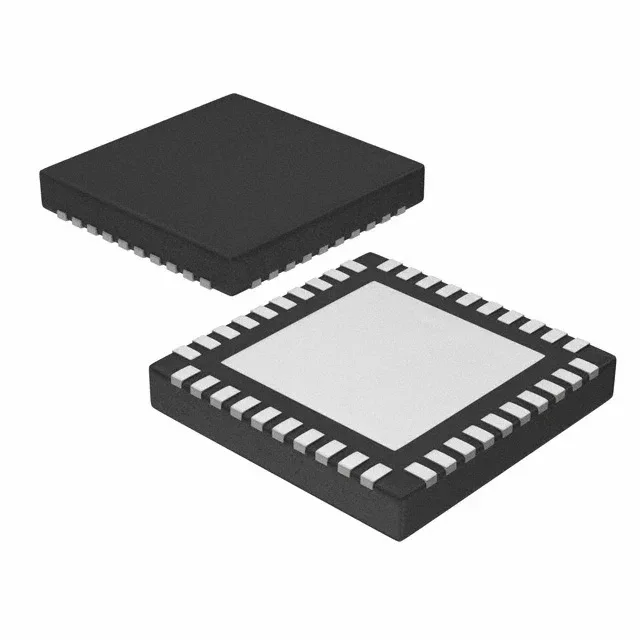
Housed in a 40-VFQFN with exposed pad (6x6 mm body), this part is a surface-mount device meant for reflow assembly. The exposed pad also helps with mechanical stability in high-vibration environments.
The MSP430F2xx series has broad installed base and multiple density options in the same 40-VQFN footprint, so if a firmware revision demands more Flash or RAM, a pin-compatible migration within the family is possible without a board spin.