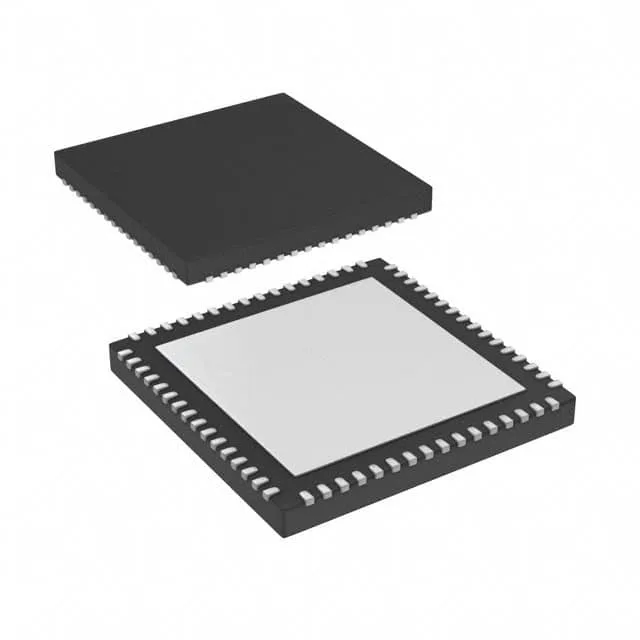
Texas Instruments MSP430F233TRGCR — Microcontrollers & Processors (MCU / MPU / DSP)

TI MSP430F233TRGCR 16-bit MCU, 16 MHz, 8 KB Flash, 64-VQFN

MPNMSP430F233TRGCR
Active

Texas Instruments MSP430F2xx series 16-bit MCU, MSP430F233TRGCR, 16 MHz, 8 KB Flash, 1 KB RAM, 48 I/O, 1.8 V to 3.6 V supply, -40 to 105 °C, 64-VQFN exposed pad.

$3.5112Ref. price · indicative, final on quote
Independent supplier — new & surplus stockAuthenticity-screened · ESD-safe packingListing updated Aug 2026

Specifications

MSP430F233TRGCR specifications
ParameterValue
SeriesMSP430F2xx
MountingSurface Mount
Oscillator typeInternal
Program memory typeFLASH
Voltage - supply (Vcc (Vdd))1.8V ~ 3.6V
Operating temperature-40°C~105°C(TA)
Speed16MHz
PackageTape & Reel (TR); Cut Tape (CT)
RAM size1K x 8
Core size16-Bit
PeripheralsBrown-out Detect/Reset, POR, PWM, WDT
ConnectivityI²C, IrDA, LINbus, SCI, SPI, UART/USART
Number of i (O)48
Core processorMSP430 CPU16
Case64-VFQFN Exposed Pad
Data convertersA/D 8x12b
Program memory size8KB (8K x 8 + 256B)

Product details

16-bit MSP430 core at 16 MHz — what the speed rating means for the BOM

The 16 MHz clock is the ceiling for the internal oscillator or an external source — at that speed the Flash requires zero wait states, so instruction fetch keeps pace without stalling the pipeline. For a design that needs deterministic interrupt latency and sub-µA standby currents, this part sits in the sweet spot of the MSP430 value line: enough throughput for sensor fusion and protocol handling, but the power budget stays low enough for battery-powered edge nodes.

Industrial temperature range and exposed-pad package — deployment context

Peripherals and connectivity — what is on-chip

An internal oscillator is built in, so a crystal is optional for applications that can tolerate the internal RC accuracy.

That means no last-time-buy pressure and no forced redesign for the foreseeable future.

Frequently asked questions

What is the closest pin-compatible alternative to MSP430F233TRGCR?

Within the MSP430F2xx family, the MSP430F235 and MSP430F237 offer higher Flash densities (16 KB and 32 KB respectively) in the same 64-VQFN footprint and pinout — a direct drop-in upgrade if firmware size grows. The base part number MSP430F233 shares the same die and package; the 'TRGCR' suffix denotes Tape & Reel packaging, not a functional difference.

How do I program the MSP430F233TRGCR?

Programming is done through the Spy-Bi-Wire (SBW) or JTAG interface using TI's MSP430 Flash emulation tool (e.g., MSP-FET or a compatible third-party programmer). The 8 KB Flash is in-system programmable and supports the standard MSP430 toolchain.