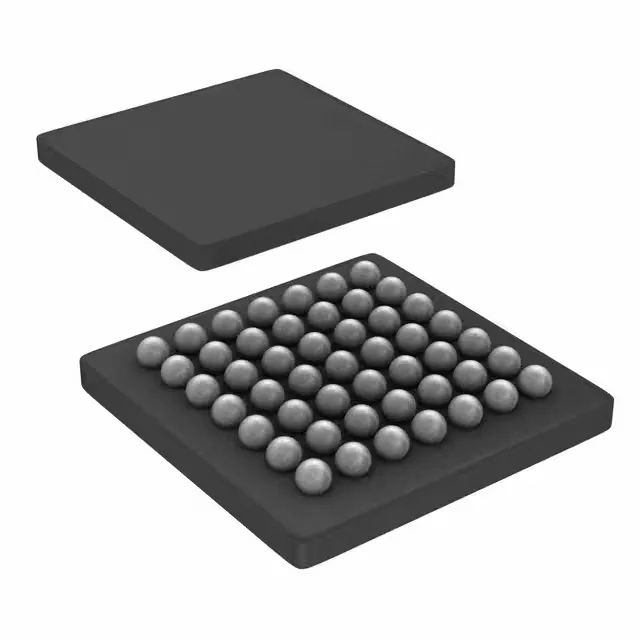
Package reality — 49-DSBGA is not a field-swap part
The MSP430F2274IYFFT: No lab bench, no swap.
What the 16 MHz and 32 KB flash mean for a BOM line
The 16 MHz core speed is the ceiling for the MSP430 CPU16 — at that clock the flash requires one wait state, so the effective MIPS is lower than the raw MHz suggests. For a sensor polling loop reading the 12-channel 10-bit ADC and shipping data over SPI or UART, 16 MHz is plenty. The internal oscillator means you can skip an external crystal for non-critical timing, saving two I/O pins and a couple of passive components.
ROHS3 compliant — no exemptions expiring, no REACH substance restrictions to track for EU shipments. The 49-DSBGA package is lead-free compatible per the TI assembly flow.
Serial connectivity and I/O count — what is actually usable
The 32 I/O lines are the total ball count, but in a 49-ball DSBGA many balls are power, ground, and no-connects. Expect around 20-24 usable GPIO after allocating for the serial peripherals and the ADC inputs. The 12-channel 10-bit ADC shares pins with digital I/O — you trade GPIO for analog inputs. For a design reading four analog sensors and talking over SPI, the pin count works. For a design needing 20 digital lines plus six analog channels, you run out of balls.