Core and memory — sizing the application space
The MSP430F2234TRHAR: That flash holds the firmware and constant data; the RAM handles the stack and small runtime buffers. For a sensor node logging a few readings or a simple control loop, this memory budget is tight but workable — expect to fit a modest application without an RTOS.
Peripheral set — what connects on-chip
32 general-purpose I/O lines give you enough pins for a keypad, LEDs, and a few external sensors. The 12-channel 10-bit ADC samples analog signals directly — no external converter needed for slow-varying inputs like temperature or potentiometer feedback. Connectivity options include I2C, SPI, and UART/USART, plus IrDA and LINbus for industrial or automotive bus interfaces. On-chip peripherals include a brown-out detect and reset, power-on reset, PWM, and a watchdog timer. These reduce external component count — the brown-out circuit holds the MCU in reset until the supply rail is stable, and the watchdog catches firmware hangs without an external supervisor IC.
Package and board integration — 40-VQFN with exposed pad
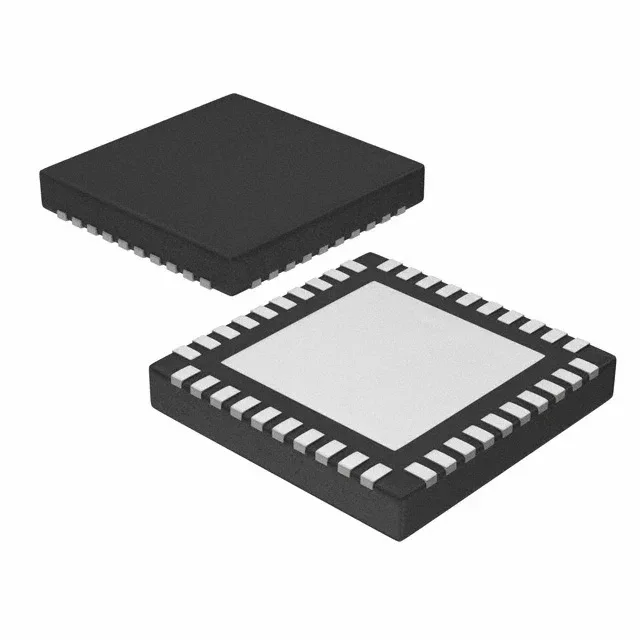
Housed in a 40-VQFN package measuring 6×6 mm, the MSP430F2234TRHAR has an exposed pad at the centre of the underside. The datasheet's recommended footprint includes a central thermal via array; skipping it can raise the junction temperature above the 105°C limit under continuous load.
Temperature grade and environment
The flash memory retains data across the full range, and the internal oscillator stays within a few percent over temperature — though for precision timing an external crystal is still recommended.