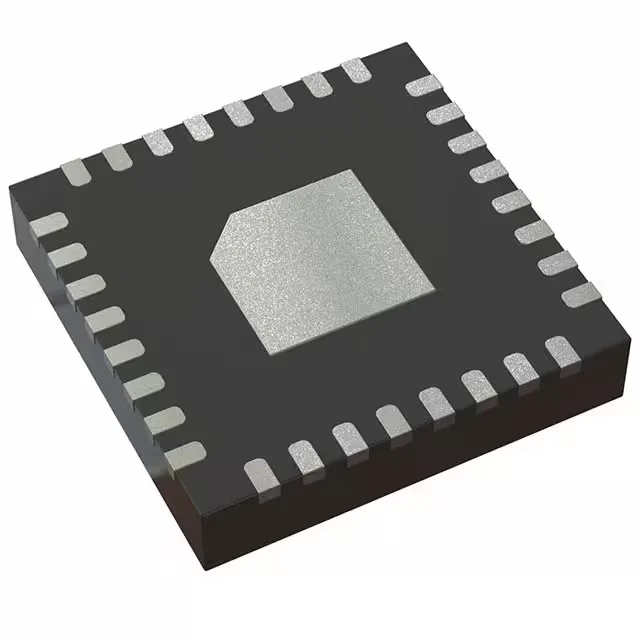
It sits in the MSP430F2xx family, a low-power line aimed at battery-operated and industrial sensor nodes where every microamp counts. The 8 KB Flash (8K x 8 plus 256 bytes) is enough for a modest control loop, a few communication stacks, and calibration data — think a temperature transmitter or a simple motor controller. The 512 x 8 RAM handles a handful of variables and a small buffer; if your application needs to log data or run a larger state machine, you will want to step up to a higher-density sibling in the same package footprint.
The integrated brown-out reset and power-on reset (BOR/POR) keep the core from running wild during supply ramps or dips — a common failure point in noisy industrial environments. The watchdog timer (WDT) provides a last-resort reset if firmware hangs.
Connectivity and I/O for sensor and control buses
The IrDA and SCI interfaces are less common but useful in legacy industrial equipment or optical isolation links.
Without those vias, the junction temperature can rise 15–20°C above ambient at full load.
No last-time-buy or end-of-life notification is on file. For new designs, the MSP430F2xx family is mature but still supported — TI's MSP430 roadmap continues with the MSP430FRxx FRAM series for lower power and higher endurance, but the F2xx remains a safe choice for legacy BOMs that need a drop-in replacement.