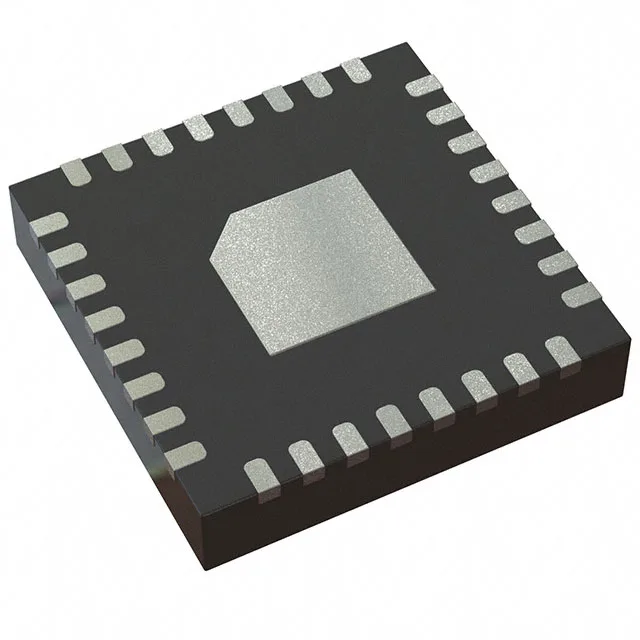
16 MHz MSP430 — the low-power control MCU for the 4 KB Flash tier
The MSP430F2122IRHBR: It carries 4 KB of Flash program memory (plus 256 B) and 512 bytes of RAM — enough for a single control loop, sensor fusion, or a simple communication protocol stack. The 24 I/O pins and integrated peripherals (brown-out detect, POR, PWM, WDT, plus I²C, SPI, UART, IrDA, and LINbus) let it replace a handful of discrete supervisor and interface ICs in a compact 32-VQFN package.
4 KB Flash and 512 B RAM — sizing the firmware envelope
At 4 KB of Flash, the firmware image is tight. There is no room for a dual-bank OTA scheme or a large lookup table — the code must be lean, typically a state machine with a few hundred lines of C. The 512 B RAM handles a modest stack, a couple of buffers, and the register file. If the application needs over-the-air updates or a complex protocol stack, this part is not the fit; step up to the 8 KB or 16 KB MSP430 siblings in the same family.
At the low end, the MCU can run directly from a near-depleted cell, which matters for battery-powered sensors and portable instruments.
Peripheral integration — what the on-chip blocks save on the BOM
The brown-out detect and POR eliminate an external supervisor IC in many designs. The PWM module drives small loads or feeds an external gate driver. The 8-channel 10-bit ADC samples analog sensors without an external converter. The I²C, SPI, UART, and LINbus interfaces handle most common serial buses — LINbus is especially useful for automotive body-node communication. IrDA is a niche but present for legacy infrared links. The 24 I/O pins are enough for a keypad matrix, a small LCD segment driver, or a handful of discrete sensor inputs.