This is a current-silicon part, not a phase-out or NRND listing.
The 105°C ceiling exceeds the usual 85°C commercial limit, which matters when the part sits near a power stage or inside a sealed enclosure with no airflow.
32-VQFN package — layout and thermal reality
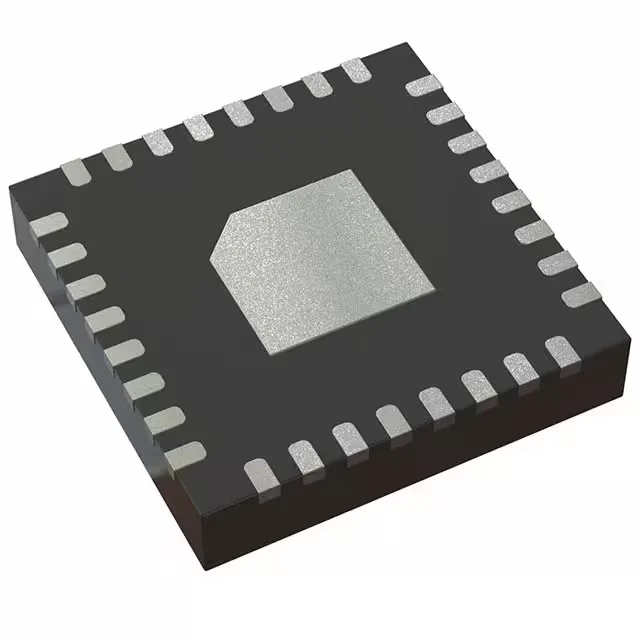
The 32-VQFN (5×5 mm) exposed-pad package (supplier device package 32-VQFN, 5×5 mm body) is a surface-mount QFN with a central thermal pad. Without the via stitch, junction temperature rises faster above 85°C ambient. The 24 I/O pins are available on the QFN perimeter; the exposed pad carries the ground return for the core and analog supply.
The 16 MHz core speed is the ceiling for the MSP430 CPU16. At this clock the flash needs zero wait states for most instructions, so the throughput is deterministic — no pipeline stalls from memory access. With 2 KB Flash and 256 B RAM, the firmware budget is tight. The 16 MHz clock lets the CPU complete a control loop and enter low-power mode quickly — the MSP430 architecture is designed for burst-and-sleep duty cycles, so the raw MHz matters less than the wake-up time and the active-mode current per MHz (not in evidence, but characteristic of the family).
Sourcing posture for this line item
No LTB deadline to chase, no date-code lottery — this is a straightforward procurement.