16 MHz core, 2 KB Flash — the memory-limited sweet spot
The MSP430F2111TDGVR is a 16-bit MSP430 CPU16 core running at 16 MHz, with 2 KB of on-chip Flash program memory and 128 bytes of RAM. The 16 MHz clock is the core's rated maximum, but actual instruction throughput depends on the flash wait-state profile — expect around 8 MIPS at 8 MHz with zero wait states, scaling down as wait states kick in above 8 MHz. The 2 KB Flash and 128 B RAM are tight: firmware must fit within this footprint, with no room for a full RTOS or heavy HAL. This part is for simple control loops, state machines, or sensor readout tasks — not for data logging or protocol stacks.
Industrial temperature grade and supervisory peripherals
The on-chip brown-out detect, POR, and watchdog timer cover the three essential supervisory blocks for unattended operation; no external reset supervisor IC is needed.
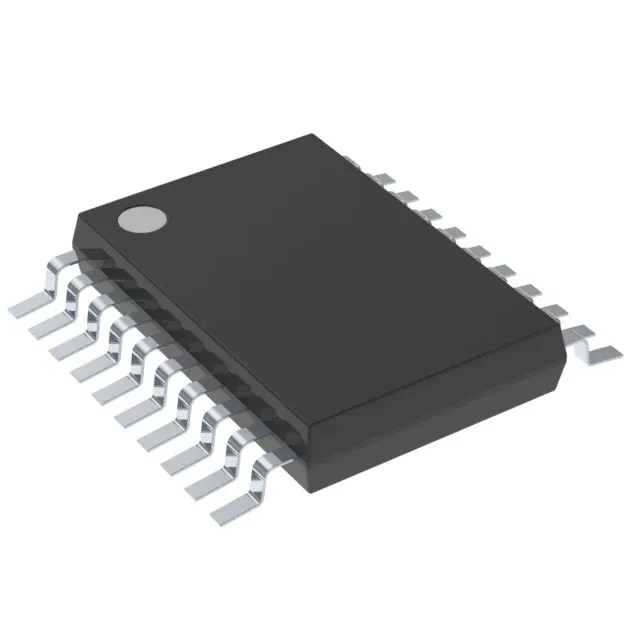
20-TVSOP footprint — board integration note
The 0.65 mm pitch demands fine-pitch soldering — a standard 0.5 mm stencil aperture works, but the narrow pad width requires precise solder paste volume control to avoid bridging. The 16 I/O lines are enough for a small keypad plus LED matrix or a handful of sensor interrupts; limited for a full parallel bus. The slope A/D converter is a low-cost, low-speed ADC — adequate for temperature or battery monitoring, not for high-accuracy or fast sampling.
Active lifecycle — no NRND flags
Texas Instruments lists this part as Active — no NRND or EOL flags. Production continues, no last-time-buy window. The base product number is MSP430F2111, so the TDGVR suffix denotes the tape-and-reel packaging variant.