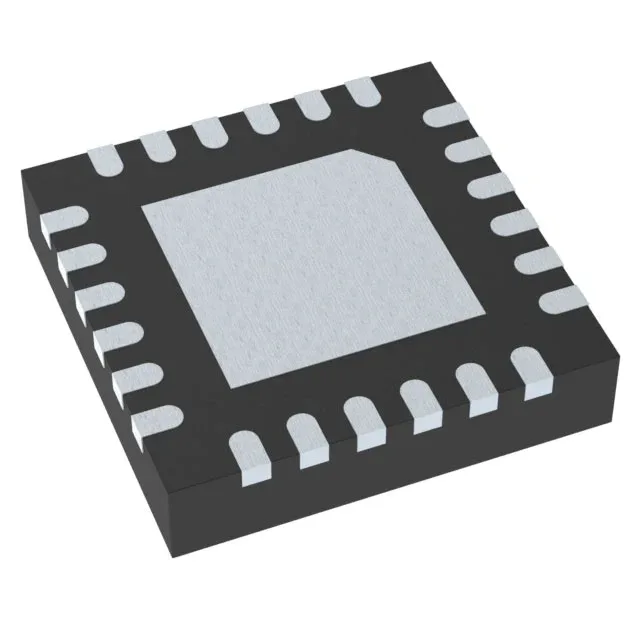
16-bit MSP430 with 2KB Flash — what the memory means for the BOM
It carries 2KB of program Flash and 128 bytes of RAM, runs at up to 16MHz, and operates from 1.8V to 3.6V. This part targets cost-sensitive, code-constrained embedded applications where battery life and deterministic interrupt response matter more than peripheral count or memory headroom — think sensor nodes, handheld instruments, or simple control loops in factory automation and consumer appliances.
2KB Flash — sizing the firmware budget
2KB of program Flash (2K x 8 plus 256 bytes of information memory) is the tightest end of the MSP430F2xx memory range. That is enough for a small state machine, a few ADC reads over the slope A/D, some PWM output via the on-chip timer, and a UART bit-bang or I²C slave. It will not fit a full RTOS, a USB stack, or a complex sensor fusion algorithm. The 128 bytes of RAM limit stack depth and data buffer size — expect to use the Flash for constant tables and to keep the call stack shallow. For a procurement team, this part is the right pick when the firmware engineer has already confirmed the code fits in 2KB; otherwise the next density step in the MSP430F2xx family (4KB or 8KB Flash) avoids a mid-project respin.
16MHz core — what it delivers and what it does not
The 16MHz clock speed is the maximum for this device, generated from the internal oscillator without an external crystal. At 16MHz the MSP430 CPU16 core executes most instructions in one or two cycles, giving roughly 8 to 16 MIPS of throughput. That is enough for real-time control loops in the kilohertz range, sensor polling at millisecond intervals, and serial communication at 115200 baud or lower. It will not handle DSP-style number crunching, high-speed data logging, or video processing. For a designer, the 16MHz ceiling also sets the active-mode current draw — expect around 250 µA to 400 µA at full speed, depending on peripheral usage, which is the trade-off for the low standby current the MSP430 family is known for.
The 1.8V to 3.6V supply range covers single-cell alkaline or Li-primary batteries down to near-end-of-life voltage, as well as regulated 3.3V or 2.5V rails. The 24-VQFN (4x4 mm) package with exposed pad helps thermal dissipation when the MCU is running continuously, though at these power levels the pad is more useful for grounding than for heat sinking.
For a BOM line, this means no immediate obsolescence risk and normal lead times through independent distribution. The base product number is MSP430F2111, which covers the full family of Flash and ROM variants in this density.