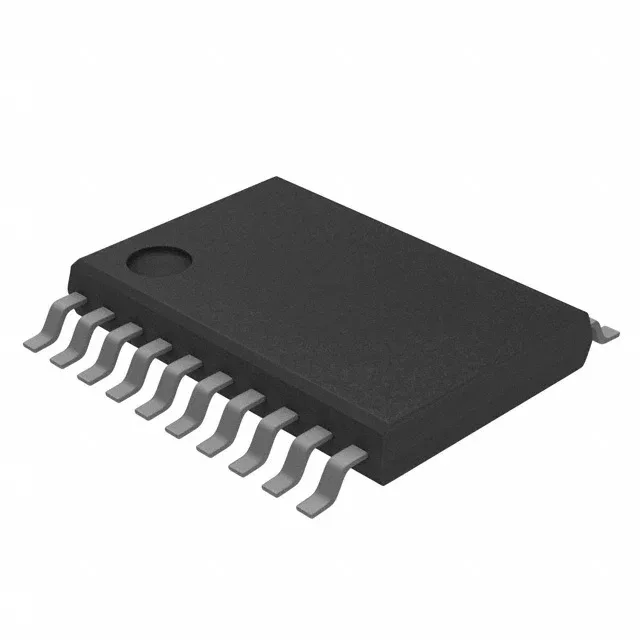
Texas Instruments lists the MSP430F2111IPW as Active. That means no last-time-buy clock is ticking — this part is still in the catalog for new builds and replacement orders alike.
16 MHz MSP430 core with 2 KB Flash — the resource envelope
The MSP430F2111IPW runs the 16-bit MSP430 CPU16 at 16 MHz. That clock ceiling is typical for the F2xx family — enough for sensor polling, serial protocol handling, and control loops that don't need a Cortex-M. The 2 KB Flash (2K x 8 plus 256 B info memory) and 128 x 8 RAM are tight: this is a part for a single-purpose firmware image, not a multi-stack RTOS. The 16 I/O lines in the 20-TSSOP package give you enough pins for a small keypad, a few LEDs, and a serial interface before you run out of real estate.
How the MSP430F2111IPW compares to the MSP430F2013IRSAT
The closest peer in the F2xx family is the MSP430F2013IRSAT. Both share the 16 MHz MSP430 CPU16 core, the same Flash memory type, and the same -40°C to 85°C temperature range. The F2013 packs a 10-channel 16-bit A/D converter and I²C/SPI connectivity, but it only gives you 10 I/O in a 16-pin QFN package. The F2111 gives you 16 I/O in a 20-TSSOP — six more pins for digital signals, at the cost of losing the high-resolution ADC and the serial peripheral interface. If your board needs more digital I/O and can live without a precision ADC, the F2111 is the better fit; if you need analog inputs and serial comms, the F2013 is the one.
Sourcing and compliance
The MSP430F2111IPW is ROHS3 compliant.