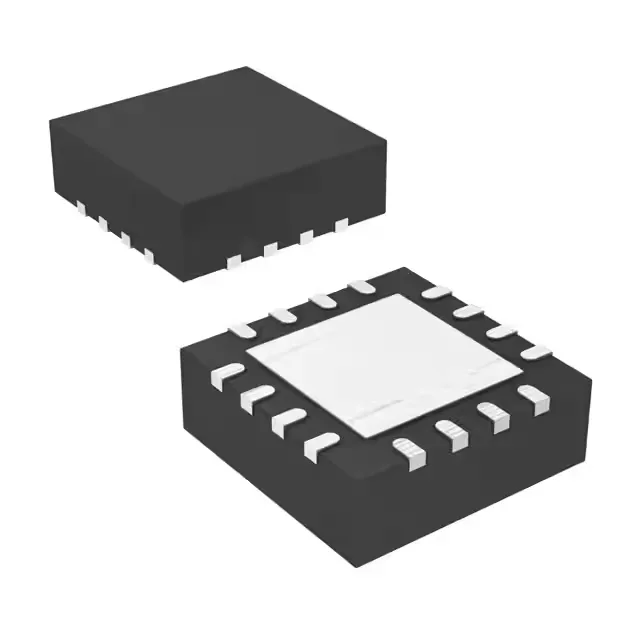
16 MHz MSP430 core with 2 KB flash and 128 B RAM
The MSP430F2013TRSAR runs the 16-bit MSP430 CPU16 core at 16 MHz. Program memory is 2 KB of flash (2K x 8 plus 256 bytes of information memory for calibration constants or bootloader code), with 128 bytes of RAM for stack and data. The 128-byte RAM is the hard constraint for interrupt nesting depth and buffer allocation — a single 64-byte serial buffer consumes half the available RAM, so the firmware must keep the stack shallow and use register-based variables where possible.
10-channel 16-bit ADC and serial connectivity
On-chip data conversion includes a 10-channel, 16-bit ADC — enough resolution to read thermocouples, strain gauges, or current-sense resistors directly without an external converter. The 16-bit resolution at 10 channels means the ADC can scan multiple analog inputs in a single control cycle. Serial connectivity covers I²C and SPI, so the device can talk to external sensors, EEPROM, or a host controller over a two-wire or four-wire bus. The 10 general-purpose I/O pins handle digital inputs, outputs, and the serial interface lines.
Industrial temperature grade and 1.8-3.6 V supply
The operating temperature range of -40 to 105 °C qualifies the MSP430F2013TRSAR for industrial environments — motor drives, outdoor sensors, and under-hood automotive modules that see both cold starts and hot soak.
On-chip peripherals reduce external BOM count
The integrated peripherals include brown-out detection (BOD) and power-on reset (POR), a PWM timer, and a watchdog timer (WDT). The internal oscillator eliminates the external crystal for most applications — the clock tree starts up from the internal DCO, so the firmware can begin executing immediately after POR without waiting for a crystal to stabilise.