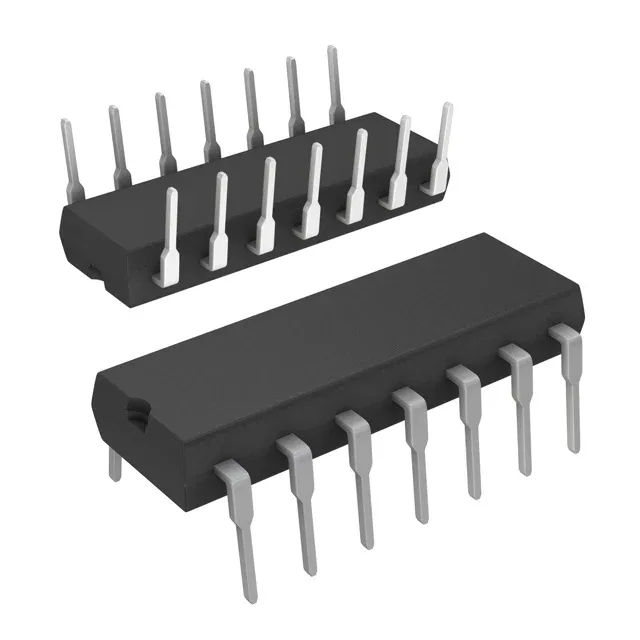
Texas Instruments MSP430F2013TN — Microcontrollers & Processors (MCU / MPU / DSP)

Texas Instruments MSP430F2013TN 16-bit MCU, 2KB Flash

MPNMSP430F2013TN
Active

Texas Instruments MSP430F2xx series 16-bit MCU, MSP430F2013TN, 16MHz core, 2KB Flash, 128 x 8 RAM, 10-ch 16-bit ADC, I²C/SPI, 14-DIP package, -40°C to 105°C, through-hole.

$4.2300Ref. price · indicative, final on quote
Packaging14-DIP (0.300", 7.62mm)
RoHSROHS3 Compliant
SeriesMSP430F2xx
Independent supplier — new & surplus stockAuthenticity-screened · ESD-safe packingListing updated Aug 2026

Specifications

MSP430F2013TN specifications
ParameterValue
SeriesMSP430F2xx
MountingThrough Hole
Oscillator typeInternal
Program memory typeFLASH
Voltage - supply (Vcc (Vdd))1.8V ~ 3.6V
Operating temperature-40°C~105°C(TA)
Speed16MHz
PackageTube
RAM size128 x 8
Core size16-Bit
PeripheralsBrown-out Detect/Reset, POR, PWM, WDT
ConnectivityI²C, SPI
Number of i (O)10
Core processorMSP430 CPU16
Case14-DIP (0.300\", 7.62mm)
Data convertersA/D 10x16b
Program memory size2KB (2K x 8 + 256B)

Product details

2 KB Flash, 128 bytes RAM — sizing the firmware footprint

The MSP430F2013TN: The 2 KB program memory and 128-byte SRAM are the tightest constraints on this part. This is a small-footprint MCU for simple control loops, state machines, or sensor readout tasks — not for data logging or complex protocol stacks. The 256-byte information memory block (part of the 2 KB total) is typically used for calibration constants or boot parameters. Plan the firmware around the 16-bit core's efficient instruction set to stay within the Flash budget; the MSP430 toolchain's linker map is your first check before committing the BOM.

10-channel 16-bit ADC — analog front-end fit

The integrated 10-channel 16-bit ADC is the standout analog peripheral for a 2 KB MCU. Sixteen-bit resolution is typically found on larger parts; here it allows direct connection to precision sensors (thermocouples, strain gauges, pressure transducers) without an external ADC. The 10 multiplexed inputs cover multi-sensor nodes.

The through-hole DIP package means this part is not a high-volume SMT pick-and-place line item, but it remains a valid choice for legacy designs, breadboard prototyping, and low-volume production runs where socketed or hand-soldered assembly is the norm.

Frequently asked questions

How to program MSP430F2013TN?

Programming uses the Spy-Bi-Wire (SBW) two-wire JTAG interface, supported by TI's MSP430 programmer tools (e.g., MSP-FET, MSP-EXP430G2 launchpad). The internal oscillator means no external clock is needed for programming. The MSP430-GCC toolchain is a valid option for development, as the MSP430 CPU16 core is supported by the open-source compiler.