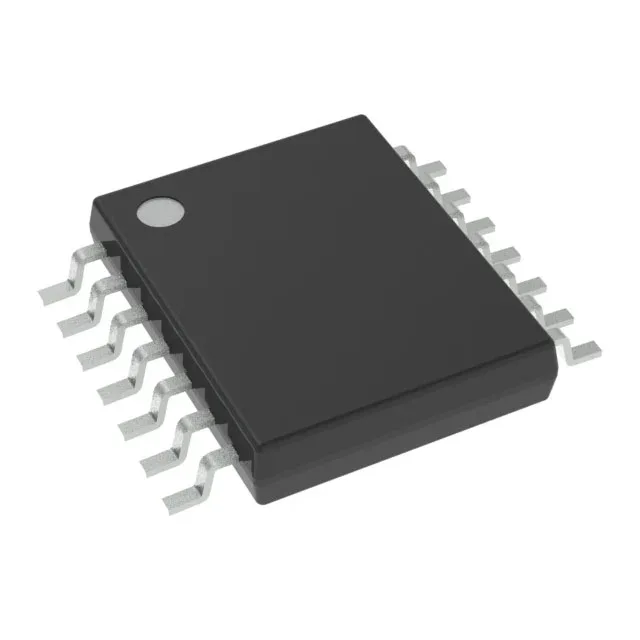
The 14-TSSOP package gives you 10 I/O lines plus I²C and SPI connectivity, with a 10-channel 16-bit ADC on board.
The 16 MHz clock is the ceiling for instruction execution; with the MSP430's single-cycle core, you get about 16 MIPS. That is fast enough for 10 kHz to 100 kHz control loops, UART bit-banging at 115200 baud, or polling a sensor at a few kilohertz. It will not run a TCP/IP stack or handle real-time audio — but for a thermocouple interface, a simple PID heater controller, or a battery monitor, it is more than adequate. The internal oscillator trims to ±1% accuracy, so many designs skip the external crystal entirely.
2 KB Flash and 128 bytes RAM — sizing the firmware budget
With 2 KB of Flash and 128 bytes of RAM, every byte counts. The 256-byte information memory section (part of the Flash block) is handy for calibration constants or bootloader flags that survive a firmware update. The RAM is tiny — you cannot buffer much data. Plan on register-based processing, interrupt-driven I/O, and a lean state machine. The MSP430's byte-efficient instruction set helps, but if your application needs a 256-byte lookup table or a FIFO for serial data, you will hit the ceiling fast.
Texas Instruments has not issued a PCN or last-time-buy notice for this part. The ROHS3 compliance covers current environmental regulations.