16 MHz MSP430 CPU16 — tight-loop sensor handling
The MSP430F2012IRSAT: The 10 available I/O lines and the internal oscillator keep the BOM lean for applications that do not need an external crystal.
2 KB Flash — firmware update strategy matters
With 2 KB of Flash (organized as 2K x 8 plus 256 bytes of information memory) and 128 bytes of RAM, the firmware image must be lean. There is no room for a full RTOS or a bootloader that occupies more than a few hundred bytes. The 256-byte information memory segment is useful for calibration constants or configuration parameters that survive a full-chip erase — plan the memory map early in the firmware bring-up phase. The brown-out detect and POR circuitry on-chip means the reset pin can be left floating in production if the supply ramp is clean.
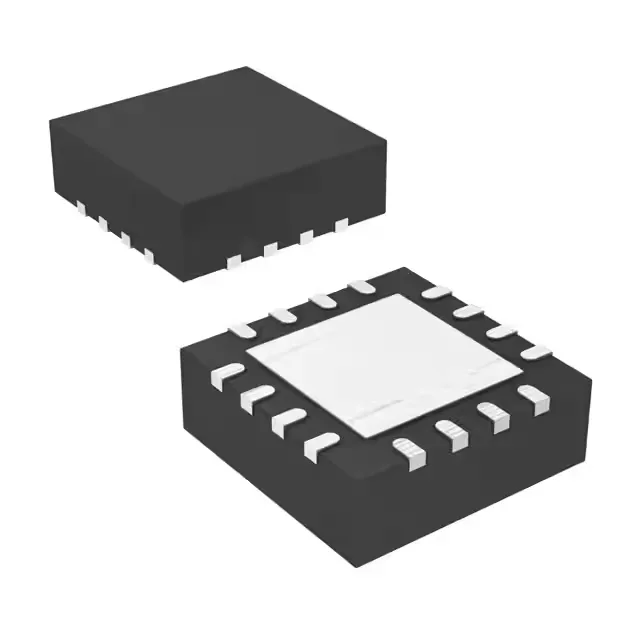
16-QFN with exposed pad — layout checklist
Decouple the supply pins with a ceramic capacitor placed as close to the Vcc/Vss pair as the footprint allows.
For dual-sourcing resilience, note that the MSP430F2012 base product number shares the same die and pinout across the QFN package variants. The F280041PZQR is a different architecture (32-bit C28x at 100 MHz) with automotive qualification and a larger memory footprint — it is not a pin-compatible or software-compatible second source for the MSP430F2012.