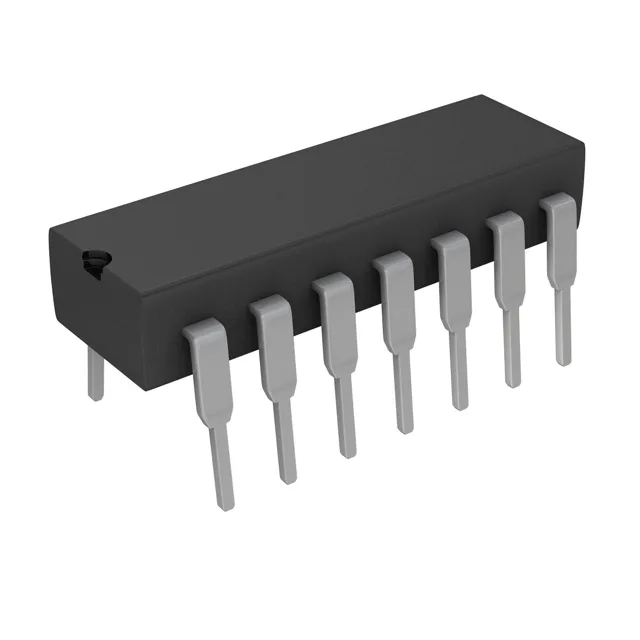
16-bit MSP430 core in a through-hole DIP — still in active production
It runs at 16 MHz and packs 2 KB of Flash program memory (2K x 8 plus 256 B) and 128 bytes of RAM.
2 KB Flash — sizing the firmware budget
The 2 KB Flash program memory is the tightest constraint for firmware development. That's enough for a modest control loop, a few state machines, and a bootloader — but leaves no room for a full RTOS or large lookup tables. Plan the firmware image early; if the application logic exceeds 1.5 KB, consider stepping up to the 4 KB or 8 KB variants in the same MSP430F2xx family (same pinout, same toolchain). The 128 bytes of RAM handle a handful of variables and a small stack; avoid large buffers or deep function call nesting.
The 16 MHz clock is stable across the full temperature range when using the internal oscillator, though an external crystal can be added for tighter timing accuracy. The brown-out detect and POR ensure clean startup and reset under noisy supply conditions common in industrial settings.
For dual-sourcing resilience, the MSP430G2231 (also in a 14-pin DIP) is a common cross-shop candidate — same core, same pinout, but with 2 KB Flash and a slightly different peripheral set. Verify the peripheral differences (e.g., the G2231 lacks the slope A/D) before substituting.