16 MHz, 2 KB Flash — what this MCU is built for
It is designed for single-function sensor monitoring, simple control loops, and battery-powered edge nodes where every microamp matters. The 10 general-purpose I/O lines and integrated slope ADC let it handle temperature readout, switch debouncing, or PWM dimming without external glue logic.
Memory budget — 2 KB Flash, 128 B RAM
With 2 KB of program Flash and 128 bytes of RAM, this part is not a general-purpose host controller. It fits applications where the firmware fits in a few hundred instructions — reading a sensor, driving a small PWM output, or managing a single serial protocol. The 256-byte information memory block (part of the 2 KB total) is useful for calibration constants or bootloader flags that survive reprogramming.
Industrial temperature, compact QFN package
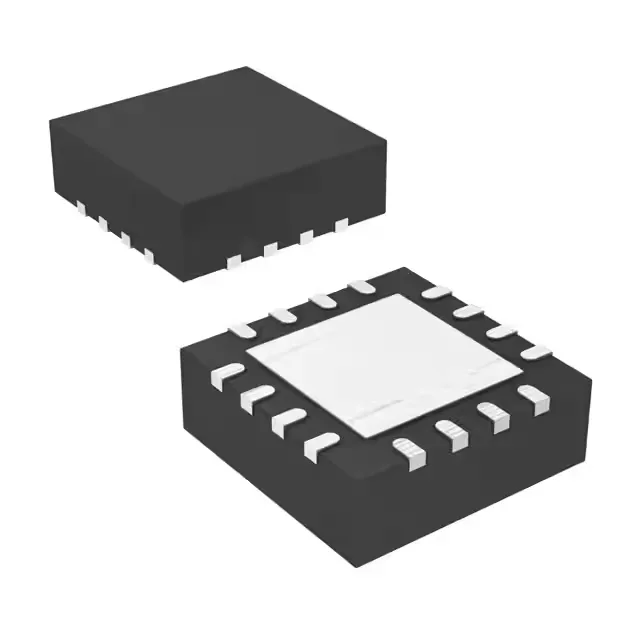
The 16-QFN package with exposed thermal pad (4x4 mm body) is a space-saver for dense PCBs, but the pad needs a proper reflow profile — this is not a hand-solder field-swap part.
Supply range and power management
The integrated brown-out detect and POR keep the CPU from running wild during power ramps — useful in battery-powered designs where the supply sags under load. The internal oscillator means no external crystal for the basic clock, saving two pins and a couple of capacitors on the BOM.