1 KB Flash and 16 MHz — what the memory and speed budget mean
The MSP430F2002IPW: The 16 MHz core speed is enough for real-time tasks like PWM generation and ADC sampling at moderate rates, but the tight memory means the firmware engineer must code efficiently — no room for a full RTOS or large lookup tables. Typical deployment is in battery-powered instrumentation, portable medical devices, and low-speed industrial sensor nodes where every microamp matters.
I²C/SPI connectivity and 10 I/O — peripheral fit for mixed-signal control
The I²C/SPI connectivity lets it talk to external sensors, EEPROM, or a host controller without extra glue logic. The 8x10b ADC reads analog signals from temperature sensors, potentiometers, or current shunts.
14-TSSOP package and surface-mount assembly
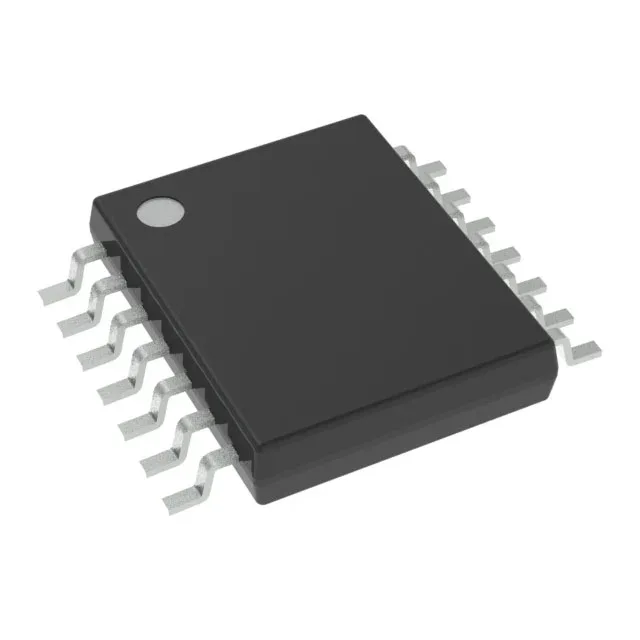
The MSP430F2002IPW comes in a 14-lead TSSOP package (0.173" body width, 4.40 mm pitch) for surface-mount assembly. The 14-TSSOP footprint is common and easy to route on two-layer boards.
For dual-sourcing resilience, note that the F280041PZQR from the Piccolo family is a different architecture (32-bit C28x) and not a pin-compatible or software-compatible alternate — it is a higher-performance part for motor-control and real-time control applications, not a direct second source.