What the key specs mean for your BOM
The 8 MHz clock is modest by today's Cortex-M standards, but the MSP430 architecture is designed to do useful work per cycle — a well-written interrupt service routine on the 16-bit RISC core can handle a PID loop or a UART packet at that speed while the CPU sleeps between events. The 48 I/O lines give you plenty of headroom for a keypad, LCD segment driver, and a handful of sensors without needing a port expander. The dual 12-bit DACs are a standout — they let you generate two independent analog outputs (setpoint voltages, waveform references) without external converters. The 8-channel 12-bit ADC, with its internal reference, samples at up to 200 ksps, which is fine for slow-loop process control or battery monitoring.
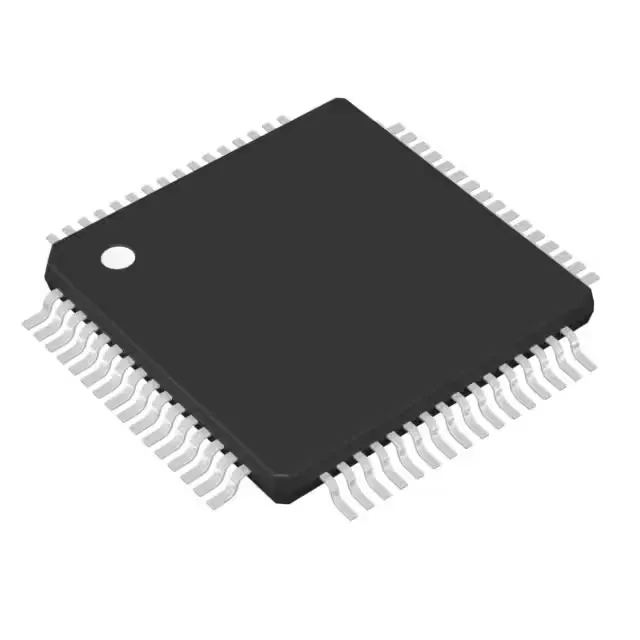
The MSP430F169IPMR comes in a 64-LQFP package (10x10 mm body) with a 0.5 mm pitch. That is a hand-solderable footprint if you have a steady hand and a fine tip, but for production volumes, a standard reflow profile for LQFP works fine. There is no exposed thermal pad — the package dissipates through the leads, so keep the ambient airflow reasonable if you are running the MCU near its 85°C ceiling with all I/O switching.
For a field-service kit, that means you can stock a few of these without worrying they will vanish from the channel next quarter.