Memory and core — the real resource ceiling
The MSP430F1491IPMG4: 60 KB of on-chip Flash (60K x 8 plus 256 B) and 2 KB of RAM (2K x 8) define the application envelope. The Flash is generous for a 16-bit mixed-signal MCU — enough for a moderate RTOS kernel, a protocol stack, and application code. The 2 KB RAM is the tighter resource: a single 1 KB data buffer plus a 512-byte stack leaves only 512 bytes for dynamic variables. The 8 MHz core speed, driven by the internal oscillator, sets the throughput ceiling. Actual instruction throughput depends on the Flash wait-state configuration at that clock rate — the MSP430 CPU16 pipeline stalls when fetching from Flash at higher frequencies, so the effective MIPS is lower than the raw clock suggests.
Supply and temperature — battery and environment fit
The on-chip POR and WDT reduce the need for external supervisor ICs, saving board space and BOM cost in battery-powered or remote deployments.
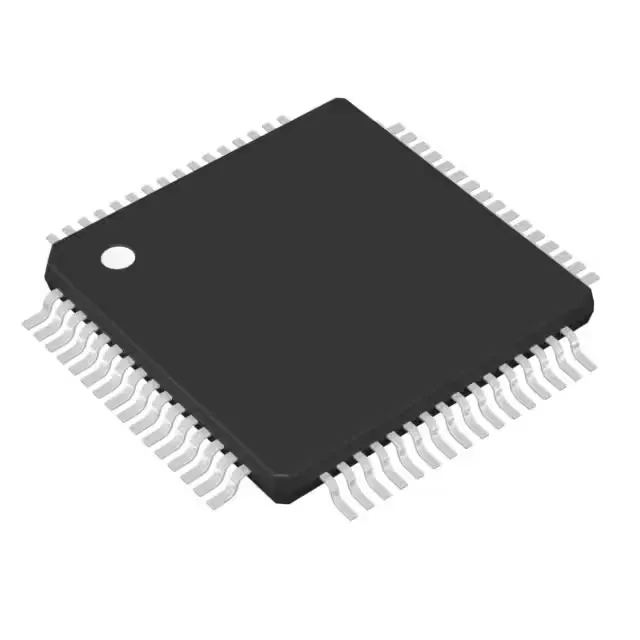
Package and I/O — layout constraints
A two-layer board can break out only the outer rows of the package, limiting usable I/O to about 32–36 pins. The 48 I/O lines include SPI and UART/USART interfaces — no I2C or CAN peripheral is on this device. If the application needs those buses, an external bridge or a different MSP430 variant is required.