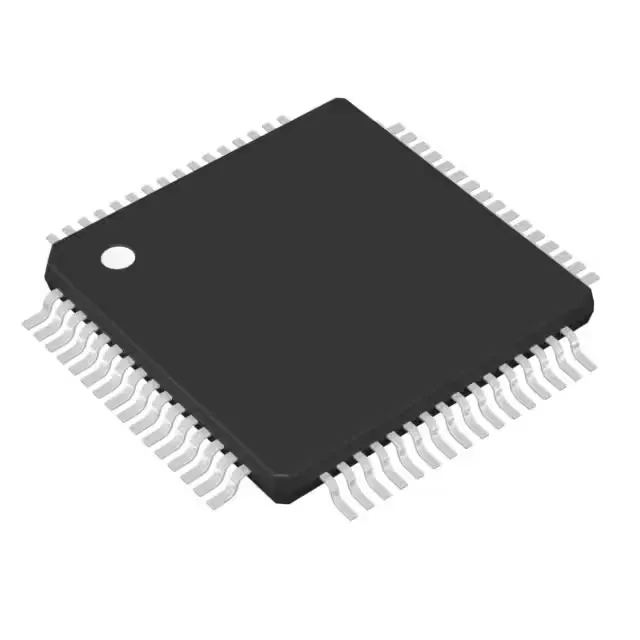
Texas Instruments MSP430F147IPMRG4 — Microcontrollers & Processors (MCU / MPU / DSP)

TI MSP430F147IPMRG4 16-bit MCU, 8 MHz, 32 KB Flash, 64-LQFP

MPNMSP430F147IPMRG4
End of Life

Texas Instruments MSP430F147IPMRG4, 16-bit MSP430 CPU16, 32KB Flash, 1KB RAM, 8MHz, 1.8V–3.6V supply, 8-channel 12-bit ADC, SPI/UART, 48 I/O, 64-LQFP, -40°C to 85°C, tape-and-reel.

Sourced new & surplus through independent channelsAuthenticity-screened · ESD-safe packingListing updated Aug 2026

Specifications

MSP430F147IPMRG4 specifications
ParameterValue
SeriesMSP430x1xx
MountingSurface Mount
Oscillator typeInternal
Program memory typeFLASH
Voltage - supply (Vcc (Vdd))1.8V ~ 3.6V
Operating temperature-40°C~85°C(TA)
Speed8MHz
PackageTape & Reel (TR)
RAM size1K x 8
Core size16-Bit
PeripheralsPOR, PWM, WDT
ConnectivitySPI, UART/USART
Number of i (O)48
Core processorMSP430 CPU16
Case64-LQFP
Data convertersA/D 8x12b
Program memory size32KB (32K x 8 + 256B)

Product details

It runs at 8 MHz, which is the sweet spot for battery-powered sensor nodes and control loops where every microamp matters — not a part you pick for pixel pushing or heavy DSP. The 32 KB Flash and 1 KB RAM (organized as 1K x 8) give enough room for a modest firmware stack with a real-time OS or a state-machine scheduler.

Supply range and oscillator — power rail flexibility

An internal oscillator is included, which saves a crystal and two load capacitors on the BOM — useful when board area is tight and the timing accuracy of ±20 ppm isn't needed.

This makes it safe to qualify for new designs and to dual-source across the MSP430F147 family variants.

Frequently asked questions

What programming tool is needed for MSP430F147IPMRG4?

The MSP430F147IPMRG4 uses the standard TI MSP430 JTAG/SBW (Spy-Bi-Wire) debug interface. Any MSP430-compatible programmer such as the MSP-FET or eZ-FET works. The internal Flash is programmed in-system via the debug header.

What is the difference between MSP430F147IPMRG4 and MSP430F147IPMR?

The "RG4" suffix on MSP430F147IPMRG4 indicates tape-and-reel packaging, while the base "IPMR" part typically ships in trays or tubes. The silicon, footprint, and electrical specs are identical — the difference is only the shipping medium for the assembly line.