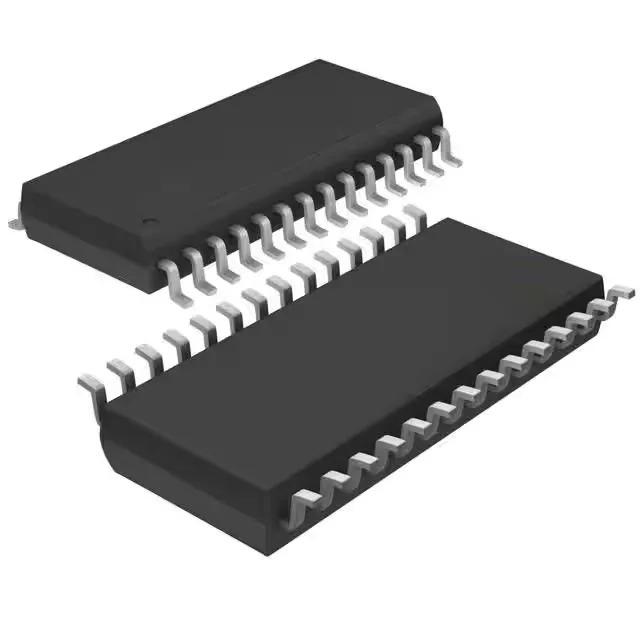
8 MHz 16-bit MSP430 — what the core speed and memory budget mean for your BOM
It runs at 8 MHz and carries 8 KB of program Flash plus 256 bytes of RAM. That 8 MHz clock is the timing anchor for this part — it sets the instruction cycle at 125 ns, which is fast enough for sensor polling loops, UART bit-banging at 115200 baud, and low-speed PWM generation, but it won't sustain real-time FFT or high-rate control loops. The 256-byte RAM is the tight constraint: a modest stack plus a few global buffers fills it quickly, so firmware must be written lean, with constants in Flash and minimal call depth. The 8 KB Flash (8K x 8 plus 256 bytes) holds compiled C code for a typical single-sensor interface or a small protocol handler; there's room for a bootloader if you keep the application tight.
Industrial temperature range — where this MCU belongs on the board
It belongs in outdoor telecom cabinets, factory-floor sensor nodes, motor-drive control boards (inside the enclosure, not on the power stage), and engine-bay-adjacent modules that see under-hood heat but not exhaust-manifold temperatures.
Peripherals and I/O — what connects where
The MSP430F123IPWR gives you 22 I/O lines, SPI and UART/USART connectivity, plus POR, PWM, and WDT peripherals. The 28-TSSOP package (0.173" body width, 4.40 mm) is a fine-pitch surface-mount footprint; it reflows well with a standard profile but needs a good solder-paste stencil aperture to avoid bridging on the 0.65 mm pitch.
That means TI is still manufacturing it, and there's no last-time-buy notice to chase.