Memory and peripheral budget — what fits in 4 KB Flash and 256 B RAM
The MSP430F1222IRHBR packs 4 KB of program Flash and 256 bytes of RAM. For a battery-powered sensor node running a polling loop with a 10-bit ADC reading and a UART output, the firmware footprint typically lands under 2 KB, leaving room for a small scheduler or state machine. The 256 B RAM, however, limits buffered data to a few hundred samples — a data logger streaming at 1 kHz would overflow in under a second without external SRAM. The 8-channel 10-bit ADC reads analog signals at 0.1% resolution — adequate for temperature, pressure, or current-sense inputs where 10 mV per LSB at a 2.5 V reference is acceptable. Higher-resolution applications (e.g., load-cell bridges) would need an external 16-bit ADC or a move to the MSP430F2xxx family with a 12-bit ADC.
Supply and temperature — runs on a coin cell, lives on the factory floor
The brown-out detect resets the core when the supply dips below the threshold, preventing corrupt Flash writes during battery drop-out. No derating is needed for ambient operation up to 85°C, though the 8 MHz core speed may require a wait-state at the high end if the Flash access time exceeds the cycle budget.
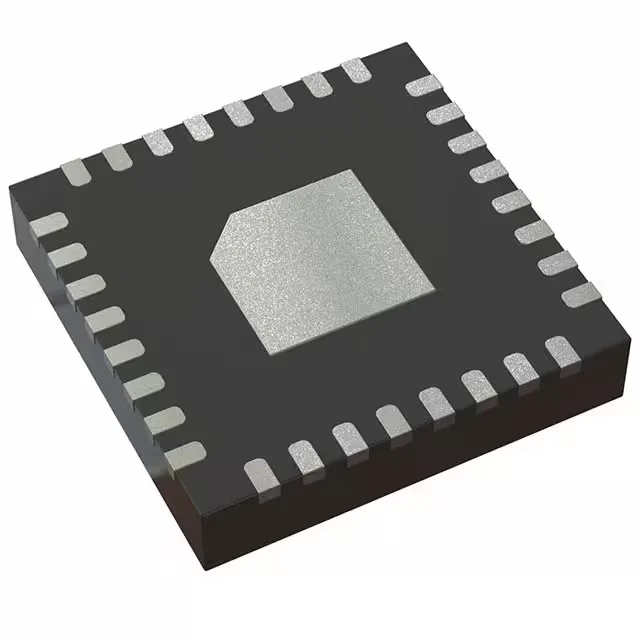
Package and board integration — 32-VFQFN with exposed pad
The 0.5 mm pitch QFN demands a solder-paste stencil with 0.25 mm apertures and a reflow profile that avoids tombstoning on the corner pins. All 22 I/O pins are brought out to the package periphery — no hidden balls. The SPI and UART/USART pins share the same port pins as general-purpose I/O, so a board spin that reassigns the serial interface to a different pin pair requires a firmware change but no PCB re-layout.
Active lifecycle — no end-of-life risk for new designs
The part is suitable for both new product introductions and production replenishment. The base product number MSP430F1222 shares the same die and peripheral set across the QFN and TSSOP package variants, so a package migration (e.g., to the 28-TSSOP) is possible without firmware changes if board space allows.