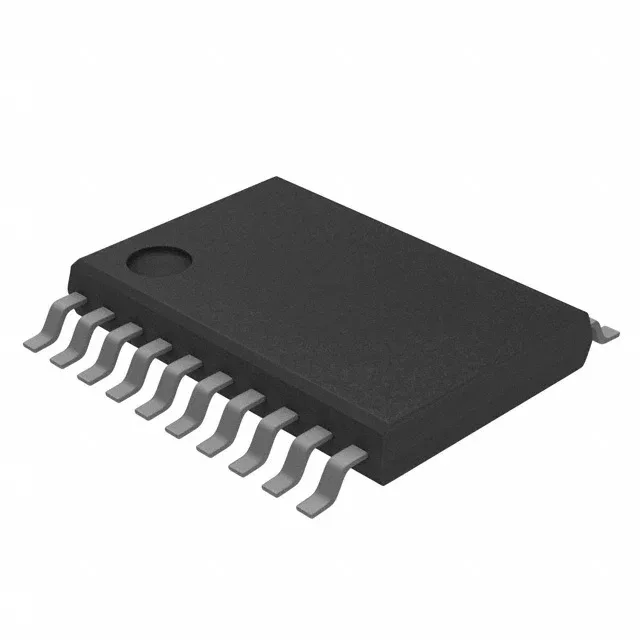
Texas Instruments MSP430F1121AIPWR — Microcontrollers & Processors (MCU / MPU / DSP)

TI MSP430F1121AIPWR 16-bit MCU, 8 MHz, 4 KB Flash, 20-TSSOP

MPNMSP430F1121AIPWR
Active

Texas Instruments MSP430x1xx series MSP430F1121AIPWR, 16-bit MSP430 CPU16 MCU, 8 MHz, 4KB Flash, 256 x 8 RAM, 14 I/O, Slope A/D, POR, WDT, 1.8V–3.6V, -40°C–85°C, 20-TSSOP.

$5.2700Ref. price · indicative, final on quote
Packaging20-TSSOP (0.173", 4.40mm Width)
RoHSROHS3 Compliant
SeriesMSP430x1xx
Independent supplier — new & surplus stockAuthenticity-screened · ESD-safe packingListing updated Aug 2026

Specifications

MSP430F1121AIPWR specifications
ParameterValue
SeriesMSP430x1xx
MountingSurface Mount
Oscillator typeInternal
Program memory typeFLASH
Voltage - supply (Vcc (Vdd))1.8V ~ 3.6V
Operating temperature-40°C~85°C(TA)
Speed8MHz
PackageTape & Reel (TR); Cut Tape (CT)
RAM size256 x 8
Core size16-Bit
PeripheralsPOR, WDT
Number of i (O)14
Core processorMSP430 CPU16
Case20-TSSOP (0.173\", 4.40mm Width)
Data convertersSlope A/D
Program memory size4KB (4K x 8 + 256B)

Product details

16-bit MSP430 with 4 KB Flash — sizing the firmware budget before you commit

It packs 4 KB of program Flash and 256 bytes of RAM — enough for a single control loop, periodic sensor reads, or a simple user interface, but tight enough that a firmware engineer should map the memory layout before the first prototype spins.

No boost converter or LDO needed in a coin-cell remote sensor — that saves board area and quiescent draw. The POR (power-on reset) and WDT peripherals keep the startup sequence reliable even as the battery voltage sags toward 1.8 V.

The 20-TSSOP package in a 4.4 mm wide body keeps the PCB footprint small, and at 0.65 mm pitch it is still reworkable with a standard fine-tip iron.

Active lifecycle — no LTB chase needed

TI lists the MSP430F1121AIPWR as Active (current production).

Frequently asked questions

What is MSP430F1121AIPWR's listed speed?

The core runs at 8 MHz. That is enough for periodic ADC reads, keypad scanning, and simple control loops, but not for real-time DSP or heavy protocol processing.