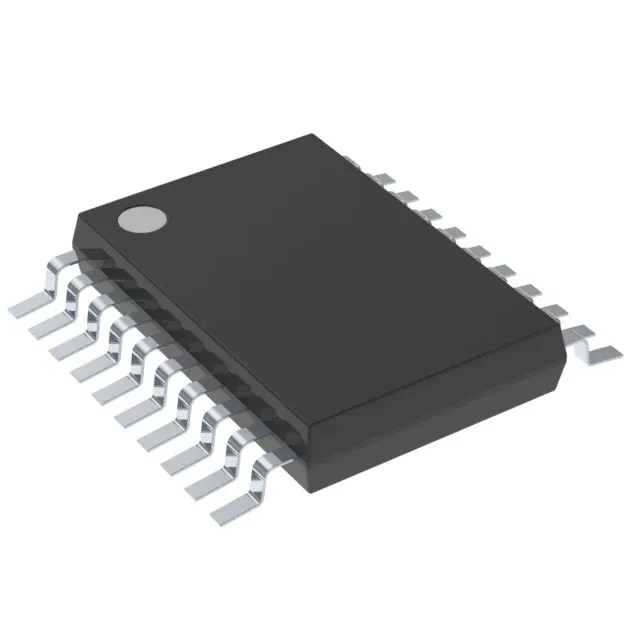
What the 8 MHz ceiling and 4 KB flash mean for a sensor node
The MSP430F1121AIDGV runs the 16-bit MSP430 CPU16 core at 8 MHz, which is the clock ceiling for this part — not a turbo mode, but the max the internal oscillator and flash read path are rated for. With 4 KB of program flash and 256 bytes of RAM, the memory budget is tight: a typical sensor polling loop with a PID or simple state machine fits, but you are not running a RTOS or a USB stack here. The 14 I/O pins handle a few digital sensors, a small keypad, or a serial interface to a host controller. The Slope A/D converter is a low-cost integrated ADC that uses an external RC time constant — it is not a SAR or sigma-delta, so expect moderate resolution and sample rate, but it saves a separate ADC chip in cost-sensitive designs.
Package and board-fit: 20-TVSOP rework reality
The exposed pad is small — no thermal paddle to worry about for reflow, but the narrow leads mean a bridged pair is easy to miss under a microscope. Pin 1 is marked by a chamfer on the package corner; the orientation is unambiguous once you see the chamfer. The package is thin enough that the die heats quickly — do not dwell or the internal bond wires can lift. Clean the pads with braid and a tacky flux before placing the new part.
The part is rated for the full temperature range, not just commercial — so a motor drive cabinet or a rooftop sensor box is within spec. Lifecycle status is Active per Texas Instruments, with ROHS3 compliance.