What this MSP430 brings to a low-power control board
The on-chip Slope A/D converter handles slow analog inputs like temperature or battery voltage without an external ADC. This is a part for simple, battery-aware control tasks: sensor polling, relay timing, keypad scanning, or basic supervisory logic where every microamp counts.
Memory and speed — what fits in 1 KB Flash and 128 bytes RAM
At 8 MHz the CPU16 core delivers enough throughput for a few hundred lines of C or a tight assembly loop. The 1 KB Flash is the hard constraint: a UART bootloader, a PID loop, and a Modbus frame handler will not all fit. Plan for a single-purpose firmware image — a thermostat state machine, a simple timer, or a one-wire sensor reader. The 128-byte RAM forces careful variable allocation; stack depth beyond a few calls and a handful of locals will overflow. Use the 256-byte information memory (part of the Flash array) for calibration constants that survive power loss.
Supply voltage and temperature — field-fit check
Not rated for under-hood automotive or downhole drilling, but fine for a solar-powered irrigation controller or a parking-lot light sensor.
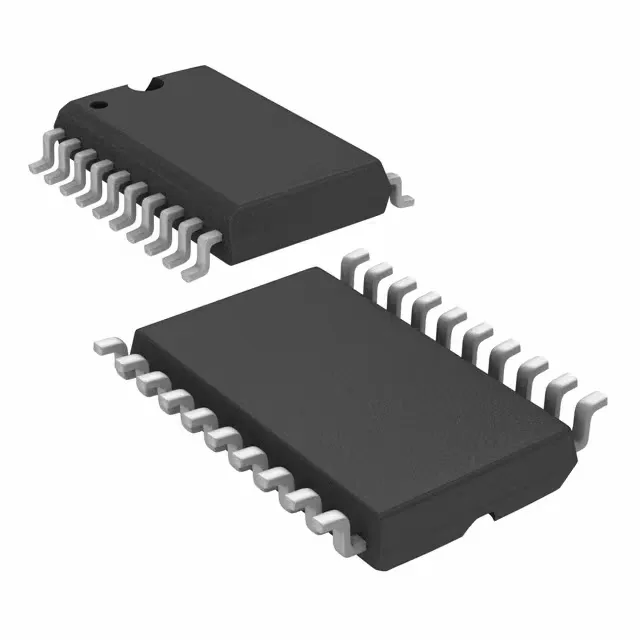
Housed in a 20-pin SOIC wide-body (0.295-inch width, 7.50 mm), this is a hand-solderable package — no hot-air station needed for rework. The 14 I/O pins are enough for a few LEDs, a pushbutton, a serial interface, and an analog input. No exposed pad, no thermal via stitching — just a straightforward two-layer board layout.
Lifecycle and sourcing — still in active production
It is ROHS3 compliant.