1 KB Flash, 128 B RAM — what the memory budget means
With 1 KB of program Flash and 128 bytes of RAM, this MCU targets simple control and monitoring tasks — think a temperature sensor polling a slope A/D converter, a basic timer-driven relay actuator, or a one-wire interface bridge. The 8 MHz core speed is enough for loop rates in the kilohertz range, but the tiny RAM rules out buffering more than a few dozen sensor readings or running a real-time operating system. If your firmware needs a protocol stack (e.g., Modbus RTU or a USB HID class driver), the MSP430F1101AIDGV will run out of code space before you finish the port — that is the BOM-fit boundary.
Package and I/O count
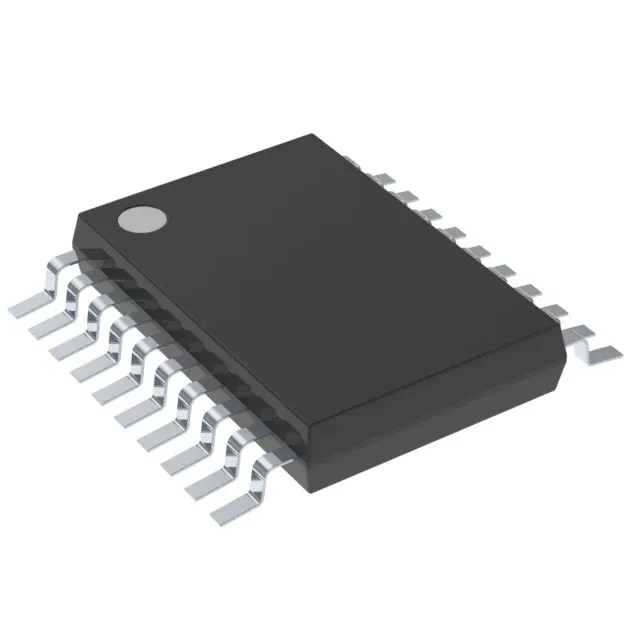
Housed in a 20-TFSOP (4.40 mm width) with a 20-TVSOP supplier package option, this is a surface-mount, fine-pitch device. The 14 I/O lines include the POR and WDT peripherals — enough for a handful of digital inputs, a couple of PWM outputs, and a serial interface (UART or SPI bit-banged). The slope A/D converter is an integrated analog-to-digital conversion method that uses the comparator and a timing reference; it is not a successive-approximation ADC, so expect lower resolution and slower conversion rates than a dedicated peripheral. For designs needing a true multi-channel ADC, a sibling from the MSP430x1xx family with a 10-bit SAR ADC would be the better fit.