It operates from 1.8 V to 3.6 V and is rated for the industrial temperature range of -40°C to 85°C, making it suitable for outdoor telecom cabinets, factory-floor instrumentation, and panel-mount meters.
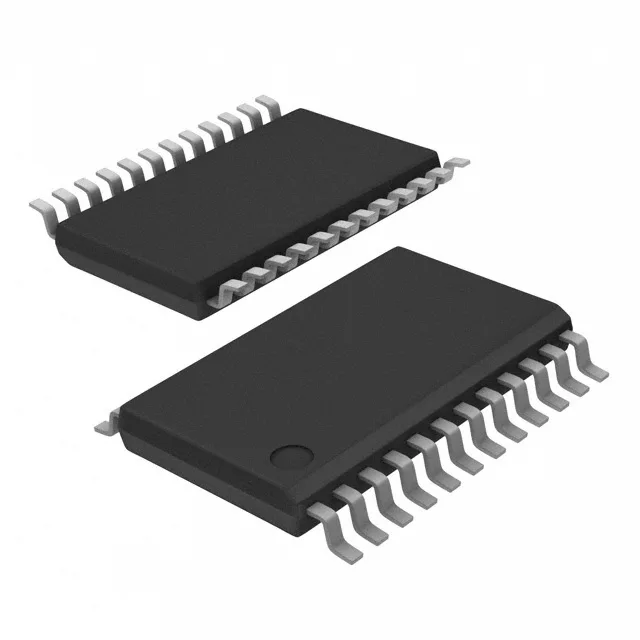
MSP430AFE233IPWR 16-bit MCU, 12MHz, 3x24b AFE, 24-TSSOP
MPNMSP430AFE233IPWR
Active
Texas Instruments MSP430F2xx 16-bit MCU, MSP430AFE233IPWR, 12MHz, 8KB Flash, 512B RAM, 3-channel 24-bit sigma-delta AFE, 1.8–3.6V supply, 24-TSSOP.
$2.9303Ref. price · indicative, final on quote
Independent supplier — new & surplus stockAuthenticity-screened · ESD-safe packingListing updated Aug 2026
Specifications
| Parameter | Value |
|---|---|
| Series | MSP430F2xx |
| Mounting | Surface Mount |
| Oscillator type | Internal |
| Program memory type | FLASH |
| Voltage - supply (Vcc (Vdd)) | 1.8V ~ 3.6V |
| Operating temperature | -40°C~85°C(TA) |
| Speed | 12MHz |
| Package | Tape & Reel (TR); Cut Tape (CT) |
| RAM size | 512 x 8 |
| Core size | 16-Bit |
| Peripherals | Brown-out Detect/Reset, PWM, WDT |
| Connectivity | SPI, UART/USART |
| Number of i (O) | 11 |
| Core processor | MSP430 CPU16 |
| Case | 24-TSSOP (0.173\", 4.40mm Width) |
| Data converters | A/D 3x24b |
| Program memory size | 8KB (8K x 8) |
Product details
Frequently asked questions
What is the operating voltage range for MSP430AFE233IPWR?
The supply voltage range is 1.8 V to 3.6 V (Vcc/Vdd).
Can MSP430AFE233IPWR be used for energy metering?
Yes, the three 24-bit sigma-delta ADCs are specifically designed for single-phase energy metering and power monitoring — they can digitise voltage and current channels simultaneously for accurate power calculation.
What is the closest pin-compatible alternative to MSP430AFE233IPWR?
No official pin-compatible replacement is listed by TI. The MSP430AFE2xx family includes variants with different Flash/RAM sizes and ADC channel counts, but pin compatibility varies by package — verify the specific order code against the datasheet.