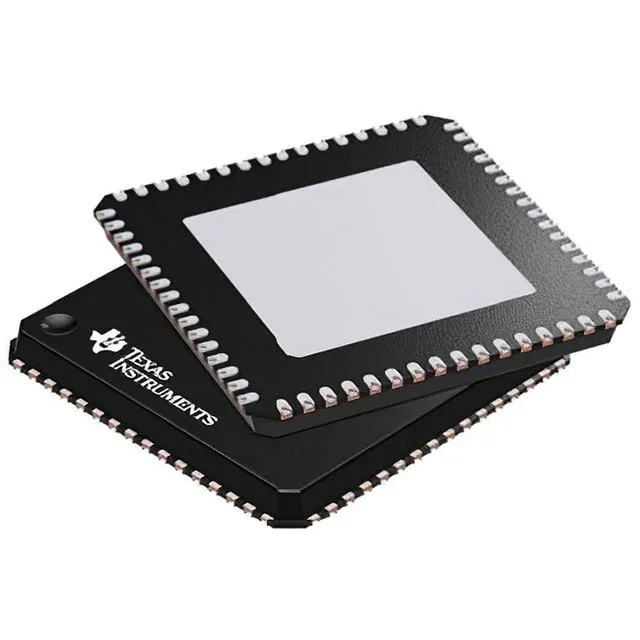
What this MSP430 brings to the board
The 48 I/O lines give plenty of room for panel buttons, indicator LEDs, and relay drivers. Brown-out detect and a watchdog timer are on-chip, so a simple power supply and an external crystal (or the internal oscillator) are all you need to get a basic system running.
At 8 MHz, this part is not a number cruncher — it is a control-loop and data-acquisition engine. A 16-bit multiply takes a few cycles, so expect a PID loop or a Modbus RTU poll to complete in the sub-millisecond range. If your design needs floating-point DSP or high-speed FFTs, you will want a Cortex-M4 or a dedicated DSP; for reading a 12-bit ADC, scaling it, and driving a DAC or a serial output, the 8 MHz clock is more than adequate.