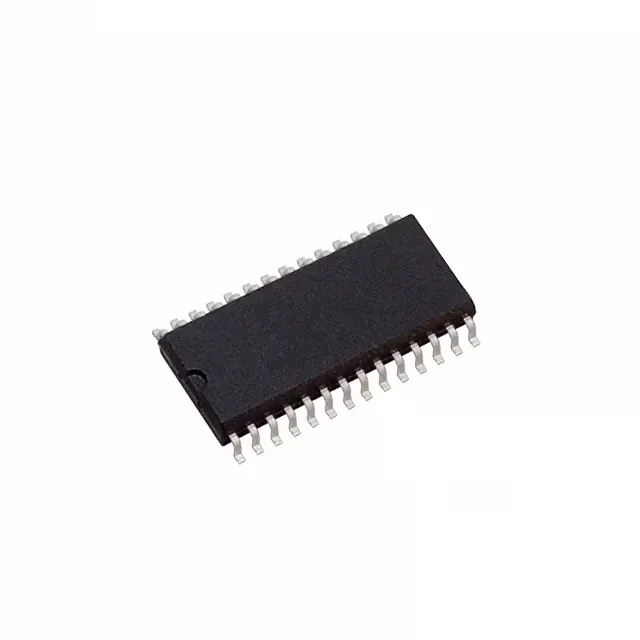
What this 16-bit MCU brings to a control board
The Texas Instruments MSP430F1222IDWR is a 16-bit MSP430 CPU16-based microcontroller from the MSP430x1xx series, clocked at 8 MHz with 4 KB of Flash program memory and 256×8 bytes of RAM. It packs 22 I/O lines, an 8-channel 10-bit ADC, and SPI/UART connectivity into a 28-SOIC package. The 1.8 V to 3.6 V supply range and -40°C to 85°C industrial temperature grade make it a fit for battery-powered or thermally demanding control boards — think sensor nodes, small motor drives, or field-instrumentation front ends where low power and moderate throughput are the priority.
8 MHz core — enough for a control loop, not for heavy number crunch
The 8 MHz clock on the MSP430 CPU16 core delivers enough cycles for a PID loop running at a few kilohertz, UART polling, or SPI transactions with a sensor ADC.
4 KB Flash — plan the firmware budget early
The 4 KB Flash (4K × 8 plus 256 B) is the main constraint for code size. A typical MSP430 UART bootloader, ADC driver, and a modest state machine fit; adding a full protocol stack like Modbus RTU or a complex display driver will push the boundary. The 256×8 RAM is tight for large lookup tables or ring buffers. If the firmware is already written for this density, it is a clean fit. If the design is still in planning, consider whether the 4 KB ceiling is comfortable or whether a sibling with more Flash is safer.
Industrial temperature range and on-chip peripherals
The integrated brown-out detect and POR eliminate external reset supervision in many designs. The 8-channel 10-bit ADC is adequate for reading thermistors, potentiometers, or current-shunt voltages — no external ADC needed for basic analog inputs.