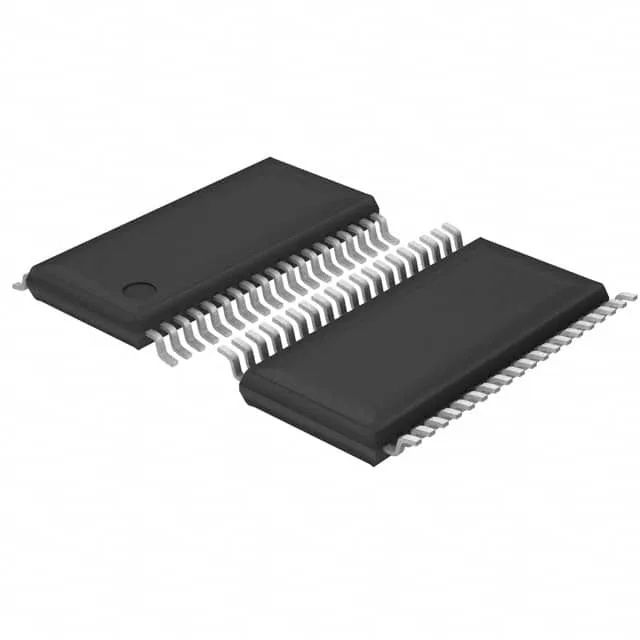
16-bit ultra-low-power MCU for industrial and sensor applications
It is rated for the industrial temperature range of -40°C to 85°C and operates from a 1.8 V to 3.6 V supply. Typical applications include industrial control, sensor interfaces, battery-powered instrumentation, and low-power data acquisition systems where the 16-bit core and peripheral set match the BOM tier.
16 MHz clock — what it means for throughput
The 16 MHz maximum clock speed is the ceiling for instruction execution on this 16-bit RISC core. For a typical sensor-read-and-log loop, that translates to roughly 16 MIPS — enough to handle 12-bit ADC conversions, SPI communication, and a simple control algorithm without stalling. If your design needs faster loop rates or DSP-style math, you would step up to a higher-frequency MSP430 or a Cortex-M part; for most low-power embedded tasks, 16 MHz keeps the power budget tight and the code simple.
12-channel 10-bit ADC — analog input count matters
The on-chip ADC provides 12 multiplexed channels at 10-bit resolution. Each conversion completes in a few microseconds, so you can sequence through all 12 channels in under a millisecond.
The 1.8 V to 3.6 V supply range lets it run from two alkaline cells or a single Li-ion battery, and the ultra-low-power MSP430 architecture keeps quiescent draw in the microamp range during sleep modes.