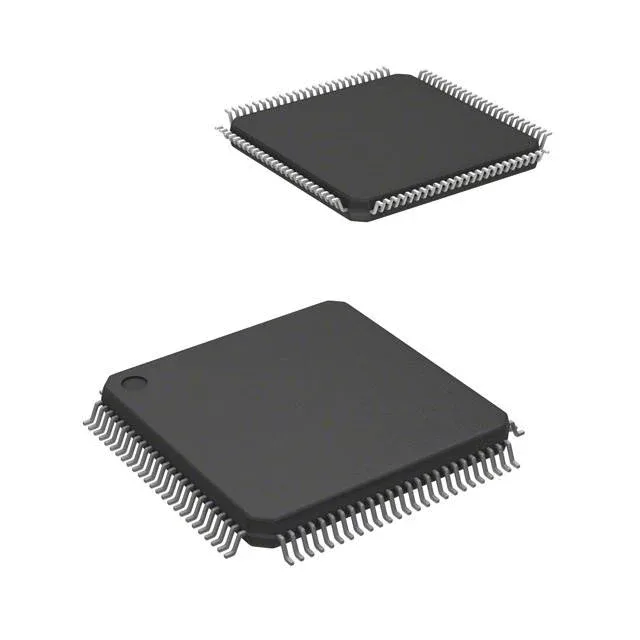
Texas Instruments MSP430A149IPZR — Microcontrollers & Processors (MCU / MPU / DSP)

TI MSP430A149IPZR 16-bit MCU, 16 MHz, 60 KB Flash, 100-LQFP

MPNMSP430A149IPZR
Active

Texas Instruments MSP430A149IPZR, MSP430x4xx series 16-bit MCU, 16 MHz, 60 KB Flash, 2.5 KB RAM, 72 I/O, I²C/SPI/UART, LCD driver, -40°C to 85°C, 100-LQFP.

$6.8818Ref. price · indicative, final on quote
Independent supplier — new & surplus stockAuthenticity-screened · ESD-safe packingListing updated Aug 2026

Specifications

MSP430A149IPZR specifications
ParameterValue
SeriesMSP430x4xx
MountingSurface Mount
Oscillator typeInternal
Program memory typeFLASH
Voltage - supply (Vcc (Vdd))1.8V ~ 3.6V
Operating temperature-40°C~85°C(TA)
Speed16MHz
PackageTape & Reel (TR)
RAM size2.5K x 8
Core size16-Bit
PeripheralsBrown-out Detect/Reset, LCD, POR, PWM, WDT
ConnectivityI²C, IrDA, LINbus, SCI, SPI, UART/USART
Number of i (O)72
Core processorMSP430
Case100-LQFP
Data convertersA/D 3x16b
Program memory size60KB (60K x 8 + 256B)

Product details

16 MHz core, 60 KB Flash — what the memory budget means for the BOM

The 60 KB Flash (organized as 60K x 8 plus 256 bytes) is sized for mid-complexity control firmware — think sensor fusion loops, protocol stacks for I²C or SPI, and LCD display management — without needing an external serial Flash for code storage. The 2.5 KB RAM handles moderate data buffers and stack depth; if your application runs multiple communication stacks or large lookup tables, budget the RAM headroom before committing the BOM line. The part integrates a brown-out detect and reset, power-on reset, PWM timer, watchdog timer, and a direct LCD driver — the LCD controller is a distinguishing feature in this MCU class, saving an external display driver IC and its associated board area.

Frequently asked questions

What is the difference between MSP430A149IPZR and MSP430A149IPZT?

The difference is the shipping medium: the MSP430A149IPZR ships in Tape & Reel (TR), while the MSP430A149IPZT ships in a tray (Tray). The device itself — die, package, firmware, and electrical ratings — is identical between the two suffix variants. Choose the reel variant for automated pick-and-place assembly lines; choose the tray variant for hand-assembly or low-volume prototyping.