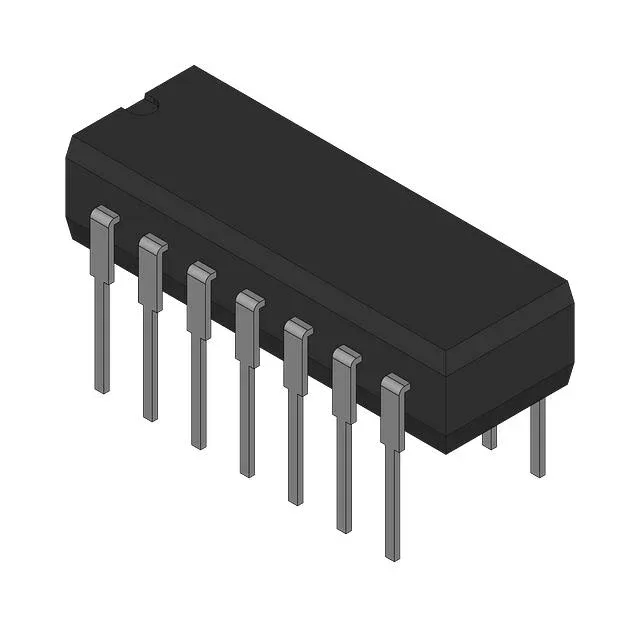
The MM74HC243N is a 74HC-series non-inverting buffer from the standard CMOS logic family, packaged in a through-hole 20-pin DIP. It contains two independent 4-bit buffer elements, each capable of driving moderate loads from a 2V to 6V supply rail. This part is a drop-in choice for legacy through-hole boards, breadboard prototyping, or designs where a simple signal buffer with no inversion is needed — common in industrial control panels, relay drivers, or as a level translator between 3.3V and 5V domains within the 74HC supply range.
Supply voltage and logic family — the fit decision
The 2V to 6V supply range is the defining parameter for BOM fit. If your system rail is 3.3V or 5V, the MM74HC243N works directly. The 74HC family offers higher noise margin than the older 74LS series at the same supply, but input thresholds are CMOS-level (not TTL), so driving it from a 5V TTL output may need a pull-up. The 2-element, 4-bit-per-element architecture means you get two independent 4-bit buffers in one package — useful for splitting a byte-wide bus into two nibbles or buffering two separate 4-bit groups.
The 20-DIP (0.300" body width, 7.62mm lead pitch) is a through-hole package that is straightforward to hand-solder or rework. No hot-air station needed — a standard iron lifts it cleanly. The 20-PDIP footprint is common across many 20-pin logic parts, so board layout is standard. The RoHS non-compliant status means this part contains lead in the solder finish; it is exempt for certain industrial or military applications but cannot be used in RoHS-mandated consumer electronics without a specific exemption.
For dual-sourcing or a higher-speed alternative, the SN74LS645-1N is a 74LS-series 8-bit transceiver in the same 20-DIP footprint, but note it is a bidirectional transceiver with TTL-level inputs and a narrower 4.75V supply tolerance — not a direct electrical replacement, but a functional alternative for designs that can accept the logic family change.