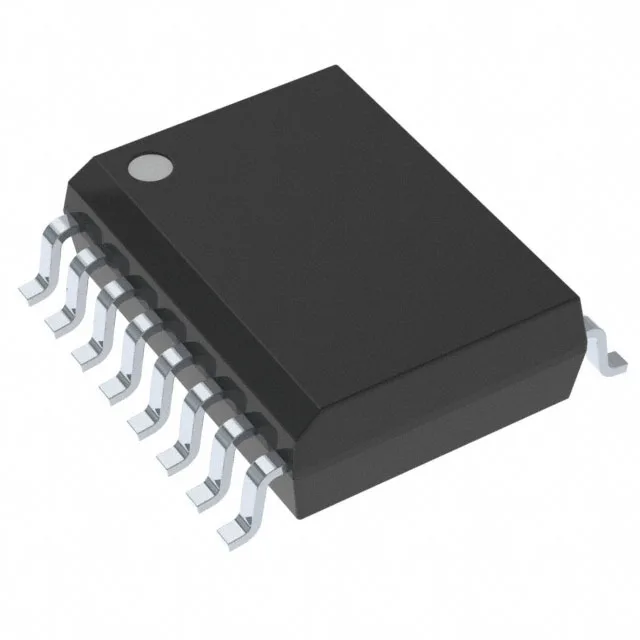
The Texas Instruments MAX3232EIDW is a full-duplex RS-232 transceiver that handles the level-shifting between a UART's 3.3V or 5V logic and the ±5V to ±15V swing RS-232 bus demands. The wide supply range from 3V to 5.5V means this part works in both legacy 5V systems and modern 3.3V-only designs without a separate regulator — a common gotcha when replacing older +5V-only RS-232 parts like the MAX232.
Supply voltage: the 3.3V compatibility question
The 3V to 5.5V supply range is the headline feature that makes the MAX3232EIDW a drop-in for 3.3V systems. Many older RS-232 transceivers require a 5V rail, forcing a separate regulator or a level translator on the UART side. This part runs directly off a 3.3V supply and still generates the RS-232 output swing using an internal charge-pump — no external ±12V rails needed. At 3.3V, the driver output swing meets the RS-232 minimum of ±5V, so the link works with any standard RS-232 receiver on the other end. The 250 kbps data rate is maintained across the full supply range.
Package footprint and replacement fit
If you are replacing a failed part on an existing board, check that the original was the wide SOIC-16, not the narrow (3.90 mm) variant — the two are not pin-compatible on the same footprint. No exposed pad, so standard SOIC-16 land patterns apply.
For BOM resilience, the MAX3232 family includes several package and temperature variants; the MAX3232EIDW is the industrial-temperature wide-SOIC option. If your board uses the narrow SOIC footprint, the MAX3232EID (narrow SOIC-16) is a direct functional equivalent in a different package.