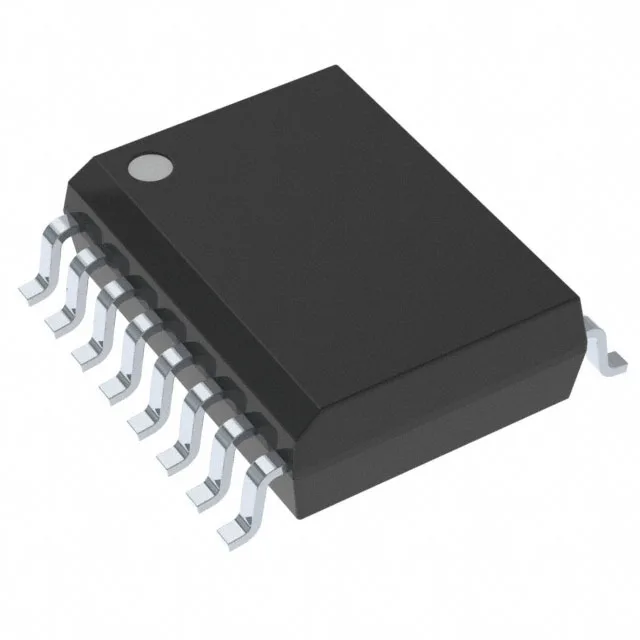
Texas Instruments MAX3232CDW — Interface & Transceivers

MAX3232CDW RS-232 Transceiver, 250 kbps, 16-SOIC

MPNMAX3232CDW
Active

Texas Instruments MAX3232CDW, RS-232 transceiver, full duplex, 2/2 drivers/receivers, 250 kbps data rate, 3V to 5.5V supply, 16-SOIC package, 0°C to 70°C operating temperature.

$2.2800Ref. price · indicative, final on quote
Independent supplier — new & surplus stockAuthenticity-screened · ESD-safe packingListing updated Aug 2026

Specifications

MAX3232CDW specifications
ParameterValue
TypeTransceiver
MountingSurface Mount
Supply voltage3V ~ 5.5V
ProtocolRS232
Operating temperature0°C~70°C
DuplexFull
PackageTube
Data rate250kbps
Case16-SOIC (0.295\", 7.50mm Width)
Receiver hysteresis300 mV
Number of drivers (Receivers)2/2

Product details

RS-232 transceiver with 250 kbps data rate and wide supply range

The 250 kbps data rate is the practical ceiling for this transceiver. If your UART runs at 115.2 kbps or lower — the most common baud rates for RS-232 — this part has comfortable margin. At 250 kbps, the receiver hysteresis of 300 mV helps reject noise on longer cable runs, but for distances beyond a few metres you will want to keep the bit rate under 115.2 kbps to maintain signal integrity. This is not a high-speed transceiver; designs needing 1 Mbps or more should look at the MAX3232E family or a dedicated high-speed RS-232 part.

Supply voltage: 3V to 5.5V — one part for both rails

The 3V to 5.5V supply range means the MAX3232CDW can run from a 3.3V rail in a low-power system or from a 5V rail in legacy equipment without a separate level shifter. The charge-pump architecture generates the RS-232 voltage levels internally, so no external ±12V supply is needed. This simplifies the power tree and saves board area.

Package and footprint: 16-SOIC wide-body

The 16-SOIC (0.295", 7.50mm width) is the wide-body SOIC package, not the narrow 150-mil version. Surface-mount assembly is standard; no special reflow profile beyond the usual for SOIC.

For BOM planning, there is no near-term end-of-life risk. If you need a second-source option, the MAX3232CSE is a pin-compatible variant in the same family — verify the operating temperature grade and package suffix for your specific design.

Frequently asked questions

What is the closest pin-compatible alternative to MAX3232CDW?

Within the MAX3232 family, the MAX3232CSE is a pin-compatible variant. The key difference is the package: MAX3232CDW uses the wide-body 16-SOIC (7.50mm width), while MAX3232CSE uses the narrow 16-SOIC (3.90mm width). Verify the footprint before substituting. Both are active and share the same base product number MAX3232.

Can MAX3232CDW replace MAX3232E?

MAX3232CDW and MAX3232E are from the same base family but differ in data rate and temperature grade. MAX3232CDW is rated for 250 kbps and 0°C to 70°C. MAX3232E typically supports higher data rates (1 Mbps) and a wider temperature range. Check your system's baud rate and ambient temperature requirements before substituting.

What is MAX3232CDW's listed type and duplex?

MAX3232CDW is a transceiver with full-duplex operation. It has two drivers and two receivers, supporting simultaneous transmit and receive on two RS-232 channels.