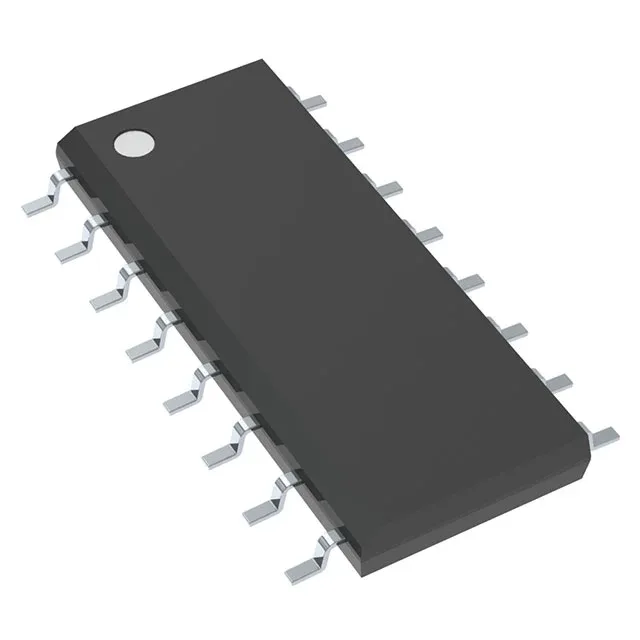
It handles serial communication at data rates up to 250 kbps, which covers most legacy UART-based protocols like simple terminal links, barcode scanners, and industrial panel interfaces. The supply range spans 3V to 5.5V, so the same part works on a 3.3V microcontroller rail or a legacy 5V RS-232 bus without a separate level translator.
The receiver hysteresis is spec'd at 300 mV. That is the dead zone between the switching thresholds — any noise spike smaller than 300 mV on the RS-232 line won't toggle the receiver output. In a factory-floor or motor-drive environment where long cables pick up coupled noise, that margin saves you from spurious characters or framing errors. Compare that to older RS-232 parts with 200 mV hysteresis; the extra 100 mV here is a genuine noise-margin improvement for a 12-foot cable run.
That covers office equipment, point-of-sale terminals, lab instruments, and climate-controlled industrial cabinets. If your design sees -40°C startup or +85°C ambient near a hot power supply, you need the industrial-grade MAX3232ID or MAX3232EID instead. The pinout is identical, so swapping temperature grades is a straight BOM-line change — no board respin.
That means TI no longer manufactures this exact commercial-temperature, tape-and-reel variant. For a production line that already qualifies this part, the immediate question is whether you have enough stock to cover your remaining build, or whether you switch to a drop-in replacement. No board change is needed — just update the BOM line and re-qualify the temperature range in your system test.