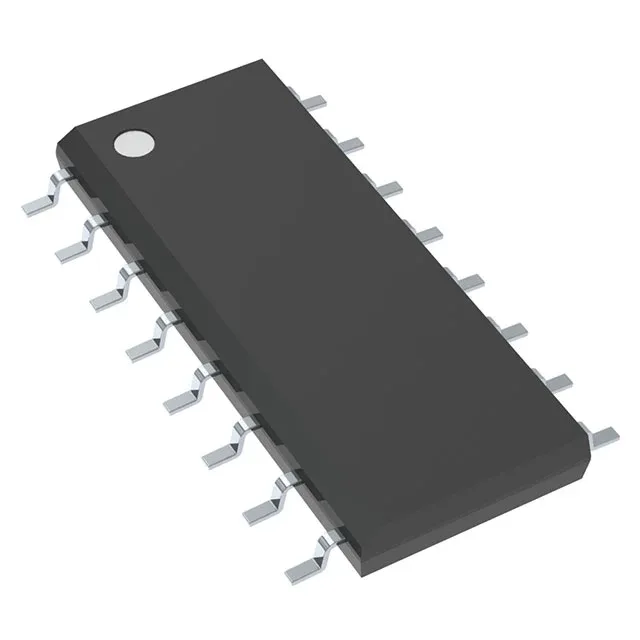
Texas Instruments MAX3232CDG4 — Interface & Transceivers

MAX3232CDG4 RS-232 Transceiver, 250 kbps, 3V-5.5V, 16-SOIC

MPNMAX3232CDG4
Obsolete

Texas Instruments MAX3232CDG4, RS-232 transceiver, full duplex, 2/2 drivers/receivers, 250 kbps data rate, 3V to 5.5V supply, 16-SOIC package, 0°C to 70°C.

$4.8900Ref. price · indicative, final on quote
Independent supplier — new & surplus stockAuthenticity-screened · ESD-safe packingListing updated Jul 2026

Specifications

MAX3232CDG4 specifications
ParameterValue
TypeTransceiver
MountingSurface Mount
Supply voltage3V ~ 5.5V
ProtocolRS232
Operating temperature0°C~70°C
DuplexFull
PackageTube
Data rate250kbps
Case16-SOIC (0.154\", 3.90mm Width)
Receiver hysteresis300 mV
Number of drivers (Receivers)2/2

Product details

For existing products already using this part, the only channel is the independent surplus market. We source verified, authentic stock from our network of vetted suppliers and quote it against an RFQ. The scorch mark on the board tells you this part died; the question is whether a pin-compatible swap can bring the board back — and it can, with the right replacement.

Pin-compatible replacement and second-source options

The MAX3232CDG4 shares the same base function as the MAX3232CSE — both are 2/2 RS-232 transceivers in 16-SOIC with the same supply range and data rate. If your board runs in a temperature-controlled room, the CDG4 is fine; if the board sees a hot enclosure or outdoor air, the CSE is the safer pick. Both are pin-compatible, so swapping one for the other requires no PCB change. For a direct drop-in replacement from TI, the MAX3232ID (industrial temp) or MAX3232IPW (TSSOP) are also options — same core specs, different package or temp range.

Supply voltage and data rate — the practical limits

The 3V to 5.5V supply range means this transceiver works with both 3.3V microcontrollers and legacy 5V UARTs without level shifting. At 250 kbps, it is fast enough for standard serial ports (115200 baud is common), but if your design needs 1 Mbps or higher (e.g., for high-speed data logging), you will need a faster RS-232 part like the MAX3232E (1 Mbps) or a USB-to-serial bridge. The 300 mV hysteresis helps reject noise on long cable runs — useful when the RS-232 cable leaves the cabinet.

Package and footprint — layout note

No surprises on the layout side — just match the standard SOIC-16 footprint.

Frequently asked questions

Is MAX3232CDG4 obsolete and what is its lifecycle status?

Yes, the MAX3232CDG4 is officially obsolete per Texas Instruments. There is no last-time-buy window remaining. For new designs, choose an active replacement like the MAX3232ID (industrial temp) or MAX3232IPW (TSSOP). For existing boards, we can supply verified surplus stock through independent distribution.

What is a direct replacement for MAX3232CDG4?

A pin-compatible drop-in replacement is the MAX3232CSE, which shares the same 16-SOIC footprint, 2/2 driver/receiver count, 250 kbps data rate, and 3V to 5.5V supply range. If you need the same commercial temperature grade, the MAX3232CD (SOIC) or MAX3232CPW (TSSOP) are also direct functional replacements.

Is MAX3232CDG4 compatible with 3.3V logic?

Yes. The supply voltage range of 3V to 5.5V means it operates from a 3.3V rail directly. The RS-232 output levels are generated by an internal charge pump, so the logic-side I/O is 3.3V-compatible. No level shifter is needed between a 3.3V UART and this transceiver.