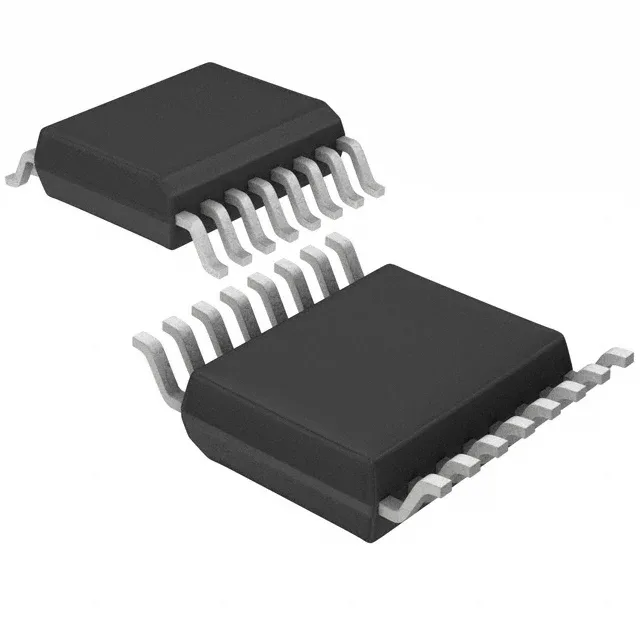
It handles the voltage translation between a 3V to 5.5V logic side and the ±5V to ±15V RS-232 bus levels, with the charge-pump generating the higher voltages internally. The 250 kbps data rate covers standard serial ports, console cables, and point-of-sale terminals — anything that talks legacy RS-232 at moderate speed. If the board sees an engine bay, rooftop enclosure, or freezer, the industrial-temperature sibling (MAX3232IDBR) is the one to spec.
At 5V it still works, so a legacy 5V-only design can drop this in without a re-spin. The charge-pump capacitors (four external 0.1 µF) are the same value across the whole supply range — no tweaking needed when you shift between 3.3V and 5V.
250 kbps data rate — is it enough?
250 kbps is the ceiling for this part. That covers standard serial ports with margin, plus common baud rates used in industrial serial protocols.
The 16-SSOP body is 5.30 mm wide — narrower than the SOIC-16 footprint, so the PCB land pattern needs to match the SSOP pitch. Surface-mount only; no through-hole option exists for this order code.
Compliance and lifecycle posture
This part is a standard catalog line from Texas Instruments, still in regular production. The MAX3232 function is widely second-sourced across multiple vendors.