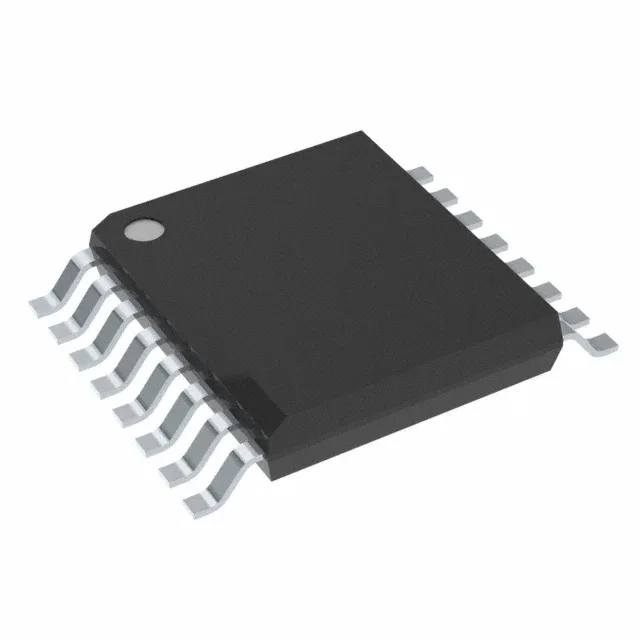
RS-232 transceiver for commercial-temperature serial links
The 300 mV receiver hysteresis helps reject noise on longer cable runs, making it a fit for desktop peripherals, point-of-sale terminals, and lab instrumentation where the ambient stays indoors.
At 250 kbps, this transceiver handles standard RS-232 asynchronous data at rates typical for legacy serial ports (115200 baud and below run comfortably). The full-duplex capability means simultaneous transmit and receive on separate pairs, matching the usual TxD/RxD wiring in DB9 connectors. If your application requires higher throughput — say 1 Mbps for industrial protocols — this part is not the right fit; look at the MAX3222 or MAX3243 family for faster slew rates.
This simplifies BOM integration in mixed-voltage systems — a 3.3 V microcontroller can drive the transceiver directly, and the RS-232 output swing still meets the ±5 V minimum per the EIA-232 standard. The 300 mV receiver hysteresis provides noise margin on the receive side, which is useful when the cable runs through electrically noisy environments like an office floor.