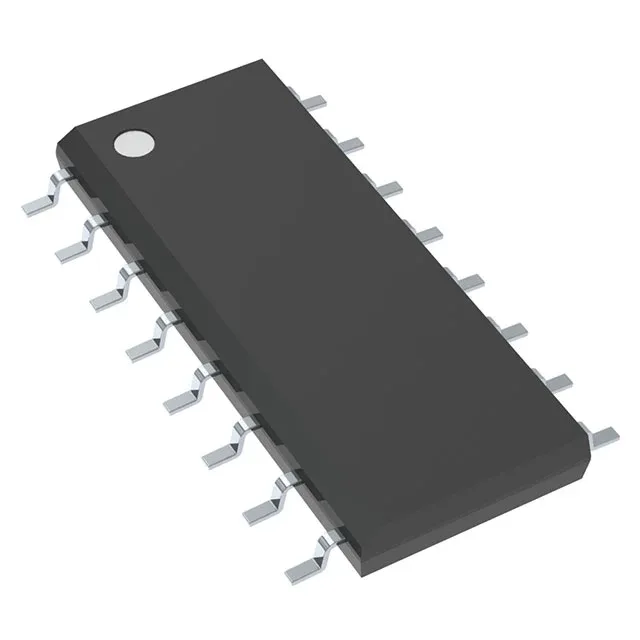
It integrates two drivers and two receivers, handling the voltage-level translation between a UART's logic signals and the ±5V to ±15V swing RS-232 requires on the cable side.
250 kbps data rate — enough for most serial links
Rated for 250 kbps, this transceiver covers the common baud rates up to 115200 (and then some) used in terminal, modem, and industrial sensor links. If your application needs 1 Mbps or faster — say, for firmware updates over a high-speed UART — this part won't close the timing.
Texas Instruments no longer manufactures this specific variant. For a new design, you would look at the current-production MAX3232 family members in the same 16-SOIC footprint — the base product number MAX3232 covers several active ordering codes with similar pinouts and electrical specs.
Package and temperature grade — design-in notes
The 16-SOIC body (3.90 mm width) is a common footprint shared with many RS-232 transceivers, making a board respin straightforward if you swap to a different MAX3232 variant.