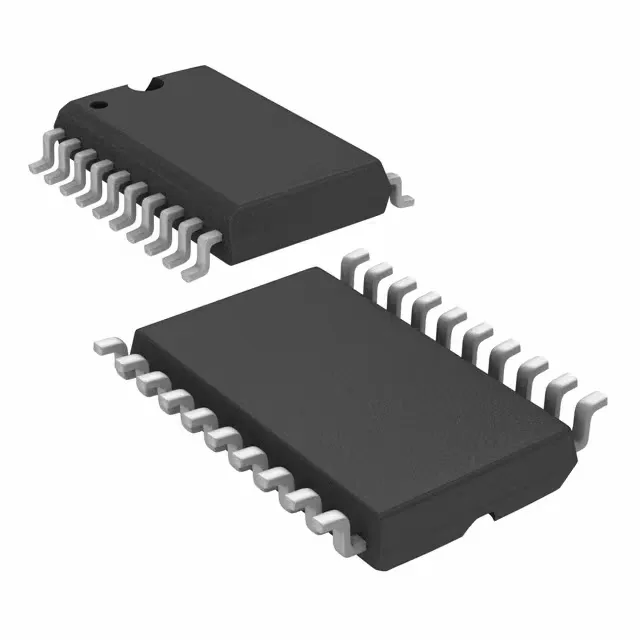
Texas Instruments MAX3222IDWR — Interface & Transceivers

MAX3222IDWR RS-232 Transceiver, 250 kbps, 20-SOIC

MPNMAX3222IDWR
Active

Texas Instruments MAX3222IDWR, RS-232 transceiver, full duplex, 2 drivers / 2 receivers, 250 kbps data rate, 3V to 5.5V supply, -40°C to 85°C, 20-SOIC wide package.

$2.4000Ref. price · indicative, final on quote
Packaging20-SOIC (0.295", 7.50mm Width)
RoHSROHS3 Compliant
Independent supplier — new & surplus stockAuthenticity-screened · ESD-safe packingListing updated Aug 2026

Specifications

MAX3222IDWR specifications
ParameterValue
TypeTransceiver
MountingSurface Mount
Supply voltage3V ~ 5.5V
ProtocolRS232
Operating temperature-40°C~85°C
DuplexFull
PackageTape & Reel (TR); Cut Tape (CT)
Data rate250kbps
Case20-SOIC (0.295\", 7.50mm Width)
Receiver hysteresis300 mV
Number of drivers (Receivers)2/2

Product details

RS-232 transceiver with wide supply tolerance

Data rate and margin for common baud rates

Rated at 250 kbps, this transceiver handles 115200 baud with substantial margin — about 2x the symbol rate needed. The 300 mV receiver hysteresis provides noise rejection on longer cable runs, which is where RS-232 links typically pick up ground offset and crosstalk.

The 20-SOIC wide-body (7.50 mm width) is a common footprint; the 1.27 mm pitch makes hand-assembly and inspection straightforward.

Frequently asked questions

What is the data rate of MAX3222IDWR and can it handle 115200 baud?

The MAX3222IDWR is rated for 250 kbps, which is over double the 115200 baud rate. It handles that common serial speed with comfortable margin, even with the receiver hysteresis set at 300 mV for noise immunity.

Is MAX3222IDWR compatible with 5V supply or only 3.3V?

It accepts a supply range of 3V to 5.5V, so it works on both 3.3V and 5V rails without modification.

What is the closest pin-compatible alternative to MAX3222IDWR?

Within the MAX3222 family, the MAX3222IDB (16-SOIC) is a narrower package variant but not pin-compatible due to different body width. The MAX3222ECUP (20-TSSOP) offers the same 2/2 driver/receiver count in a smaller footprint but requires a layout change. For a direct drop-in, stay with the 20-SOIC wide-body variants sharing the same base number.