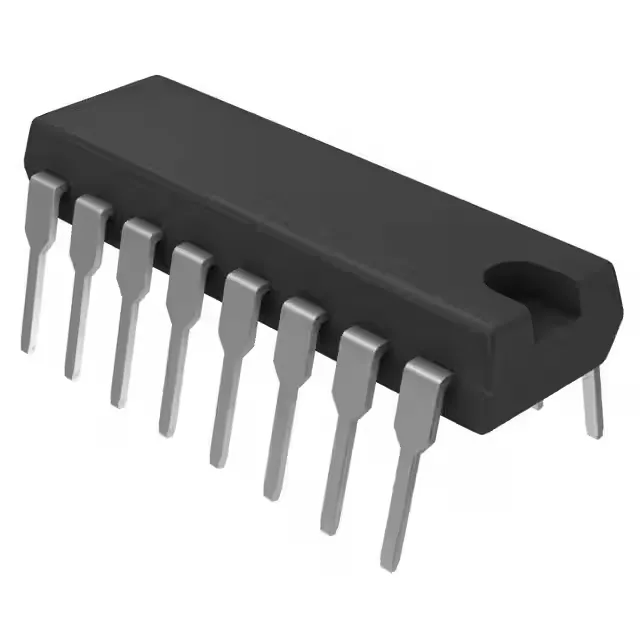
Texas Instruments MAX232IN — Interface & Transceivers

MAX232IN RS-232 Transceiver, Full Duplex, 120 kbps, 16-PDIP

MPNMAX232IN
Active

Texas Instruments MAX232IN RS-232 transceiver, full duplex, 2 drivers / 2 receivers, 120 kbps data rate, 4.5 V to 5.5 V supply, -40°C to 85°C, 16-PDIP through-hole package.

$1.9100Ref. price · indicative, final on quote
Packaging16-DIP (0.300", 7.62mm)
RoHSROHS3 Compliant
Independent supplier — new & surplus stockAuthenticity-screened · ESD-safe packingListing updated Aug 2026

Specifications

MAX232IN specifications
ParameterValue
TypeTransceiver
MountingThrough Hole
Supply voltage4.5V ~ 5.5V
ProtocolRS232
Operating temperature-40°C~85°C
DuplexFull
PackageTube
Data rate120Kbps
Case16-DIP (0.300\", 7.62mm)
Receiver hysteresis500 mV
Number of drivers (Receivers)2/2

Product details

RS-232 interface in a through-hole DIP

The 120 kbps maximum data rate is the original MAX232 legacy speed. If your design requires 250 kbps or 1 Mbps RS-232 (common with higher-baud UARTs on modern MCUs), the MAX232IN will not close the link — you need the MAX232A family, which runs at 230 kbps minimum. For 9600 or 115200 baud legacy equipment, this part is a direct fit and the 500 mV receiver hysteresis provides solid noise rejection on long cable runs.

For new designs, the through-hole PDIP package is a board-area consideration — the SOIC surface-mount variants (MAX232ID, MAX232IDR) share the same core but require a different PCB footprint.

Frequently asked questions

What is the difference between MAX232IN and MAX232A?

The primary difference is data rate: MAX232IN is rated at 120 kbps, while the MAX232A family supports at least 230 kbps. The MAX232A also typically operates with smaller external capacitors (0.1 µF vs 1.0 µF). Pinout and function are identical, so a swap requires only capacitor value changes and a baud-rate check.