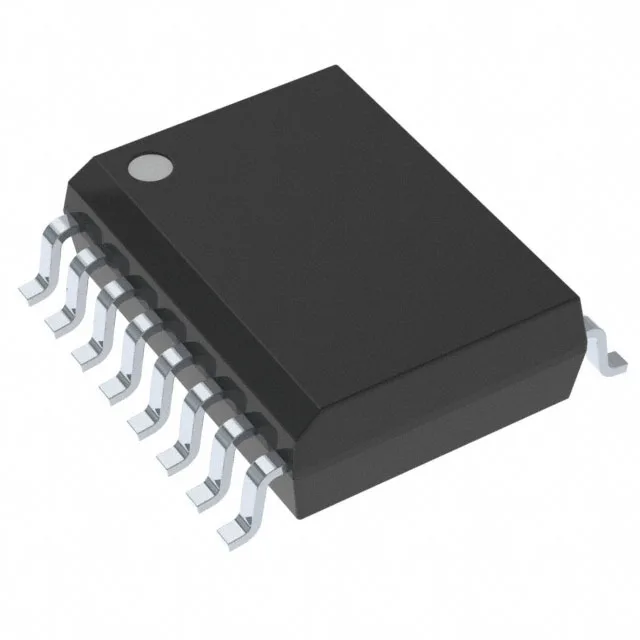
2/2 RS-232 transceiver in the wide 16-SOIC body
This matters when you're replacing a legacy MAX232 part on a board originally laid out for the wide-body package; the narrow version won't align with the existing pad pattern. Data rate is rated at 120 Kbps, which covers the typical UART speeds for RS-232 links in industrial terminals, point-of-sale equipment, and serial console ports. The 500 mV receiver hysteresis gives clean signal recovery on noisy cables up to a few metres.
Industrial temperature grade and active lifecycle
The commercial-grade MAX232 parts (0°C to 70°C) would risk marginal timing or latch-up in those environments.
What the 120 Kbps data rate tells you about fit
120 Kbps is modest by today's standards — roughly 15 Kbytes per second. That is fine for terminal emulation, configuration uploads, or low-speed sensor polling over a few metres of cable. If your application streams firmware images at higher rates, you would need a part like the MAX3221 or MAX3243 that pushes into the 1 Mbps range. The 120 Kbps ceiling here is a deliberate match for the original MAX232 architecture; the charge-pump capacitors and slew-rate shaping are optimised for this speed.