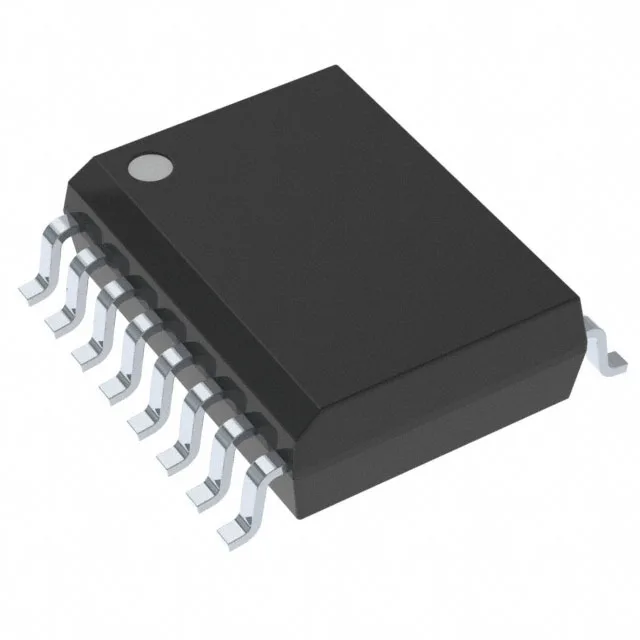
RS-232 interface for 5V-only systems
The receiver hysteresis is specified at 500 mV, providing noise immunity on the serial lines. This is the wide-body SOIC variant (7.50 mm width) on tape-and-reel, suited for automated assembly lines.
At 120 kbps, this part is a good fit for legacy RS-232 links running at 115.2 kbps or slower — think industrial PLCs, point-of-sale terminals, and serial console ports. If your design targets 1 Mbps or higher (common on newer UARTs), the MAX232 family tops out here; you would need a faster transceiver like the MAX3232 or a dedicated 3.3V part. The 500 mV receiver hysteresis helps reject noise on longer cable runs, which is a practical advantage in factory-floor environments.
That means no last-time-buy window to track, no end-of-life scramble. For dual-sourcing, the base product number MAX232 is second-sourced by multiple manufacturers, so pin-compatible alternatives exist if supply tightens.
Temperature range and industrial fit
It is suitable for outdoor telecom cabinets, motor drives, and HVAC controllers where the ambient temperature swings. The 16-SOIC package with 1.27 mm pitch is straightforward to route and hand-solder if needed, though the wide body takes up more board area than the narrow SOIC-16 variant.