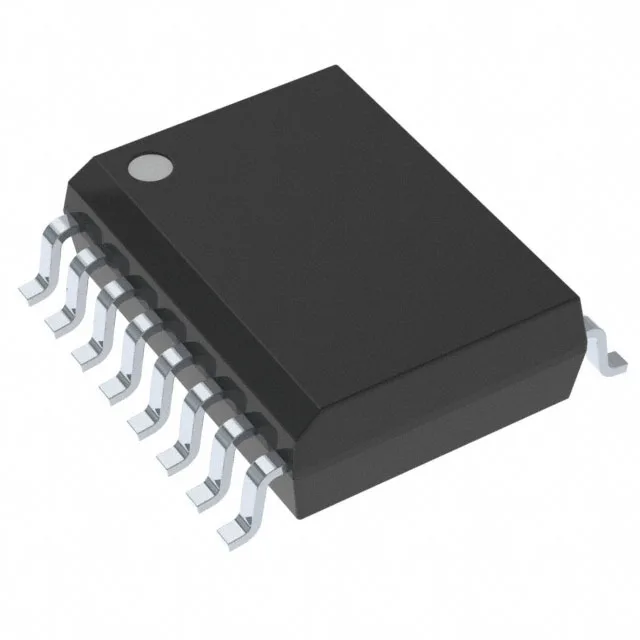
Texas Instruments MAX232EIDWR — Interface & Transceivers

MAX232EIDWR RS-232 Transceiver, 250 kbps, 16-SOIC

MPNMAX232EIDWR
Active

Texas Instruments MAX232EIDWR, RS-232 transceiver, full duplex, 2 drivers / 2 receivers, 250 kbps data rate, 4.5V to 5.5V supply, -40°C to 85°C, 16-SOIC wide package.

$1.4700Ref. price · indicative, final on quote
Packaging16-SOIC (0.295", 7.50mm Width)
RoHSROHS3 Compliant
Independent supplier — new & surplus stockAuthenticity-screened · ESD-safe packingListing updated Aug 2026

Specifications

MAX232EIDWR specifications
ParameterValue
TypeTransceiver
MountingSurface Mount
Supply voltage4.5V ~ 5.5V
ProtocolRS232
Operating temperature-40°C~85°C
DuplexFull
PackageTape & Reel (TR); Cut Tape (CT)
Data rate250kbps
Case16-SOIC (0.295\", 7.50mm Width)
Receiver hysteresis500 mV
Number of drivers (Receivers)2/2

Product details

RS-232 transceiver for industrial serial links

250 kbps data rate — what it buys you

At 250 kbps this part comfortably handles 115200 baud with margin, and can push 230400 baud if the cable is short and the loading is light. The 500 mV hysteresis on the receiver inputs helps keep bit errors low when the line picks up coupled noise from nearby motors or switching supplies. If your design needs faster throughput — say 1 Mbps — you would step up to a MAX3223 or a MAX3232 family part, but for the vast majority of RS-232 links (serial console, modem control, industrial sensor polling) 250 kbps is enough.

Supply rail and temperature — where it runs

Lifecycle and compliance — still in production

The base product number MAX232 has been around for decades, and TI continues to manufacture the -EIDWR variant in the wide SOIC package.

Frequently asked questions

What is the data rate of MAX232EIDWR?

The MAX232EIDWR supports a data rate of 250 kbps. That is the maximum specified rate; it will run 115200 baud with plenty of margin and can handle 230400 baud on short, well-terminated cables.

What is the difference between MAX232EIDWR and MAX232EIPWR?

The difference is the package. The MAX232EIDWR comes in a 16-SOIC wide body (7.50 mm width), while the MAX232EIPWR is in a 16-TSSOP package. The TSSOP is narrower and has a finer pitch, so the two are not footprint-compatible.

Does MAX232EIDWR have a lead-free finish?

Yes, the MAX232EIDWR is ROHS3 compliant, which means it meets the lead-free and restricted-substance requirements for RoHS. The plating is matte tin or similar lead-free finish.