The 500 mV receiver hysteresis cleans up noisy lines common in industrial or legacy serial links.
The 120 kbps ceiling is the classic MAX232 speed — fine for legacy RS-232 at 9600 or 115200 baud, but not for the 1 Mbps capable MAX232A or MAX3232 variants. If your UART is set to 230400 baud or higher, this part will miss bits. For standard industrial protocols (Modbus RTU at 19200, terminal links at 115200), the margin is comfortable. No trick to getting the full rate: the charge-pump capacitors per the datasheet values, and the load capacitance stays under 2500 pF per the RS-232 standard.
Active lifecycle — no LTB panic needed
No last-time-buy notice, no end-of-life flag. If you are stocking spares for legacy boards, the active status means the factory channel is still open — no need to broker-surf yet.
Field-swap reality: orientation and handling
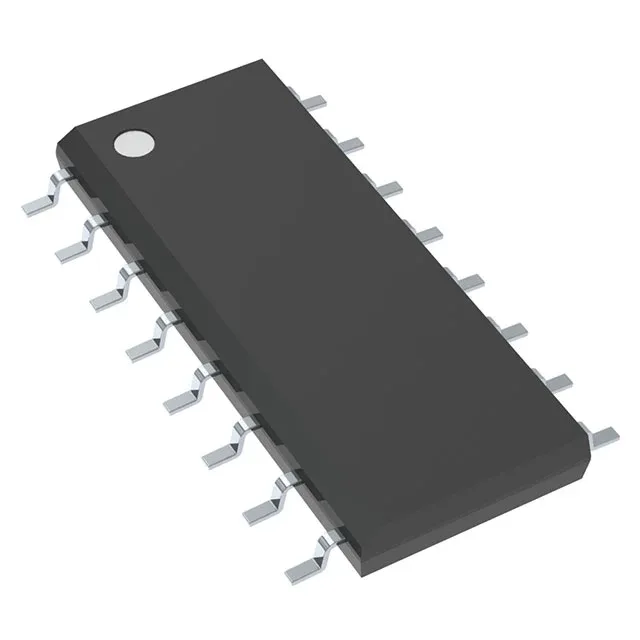
No exposed pad, no thermal-via requirement — just the usual decoupling caps (0.1 µF and 1 µF per the charge-pump layout). If you are swapping this on site without a reflow oven, a hot-air station with fine nozzle and some flux paste will get it done; the body is 3.90 mm wide, so tweezers work.